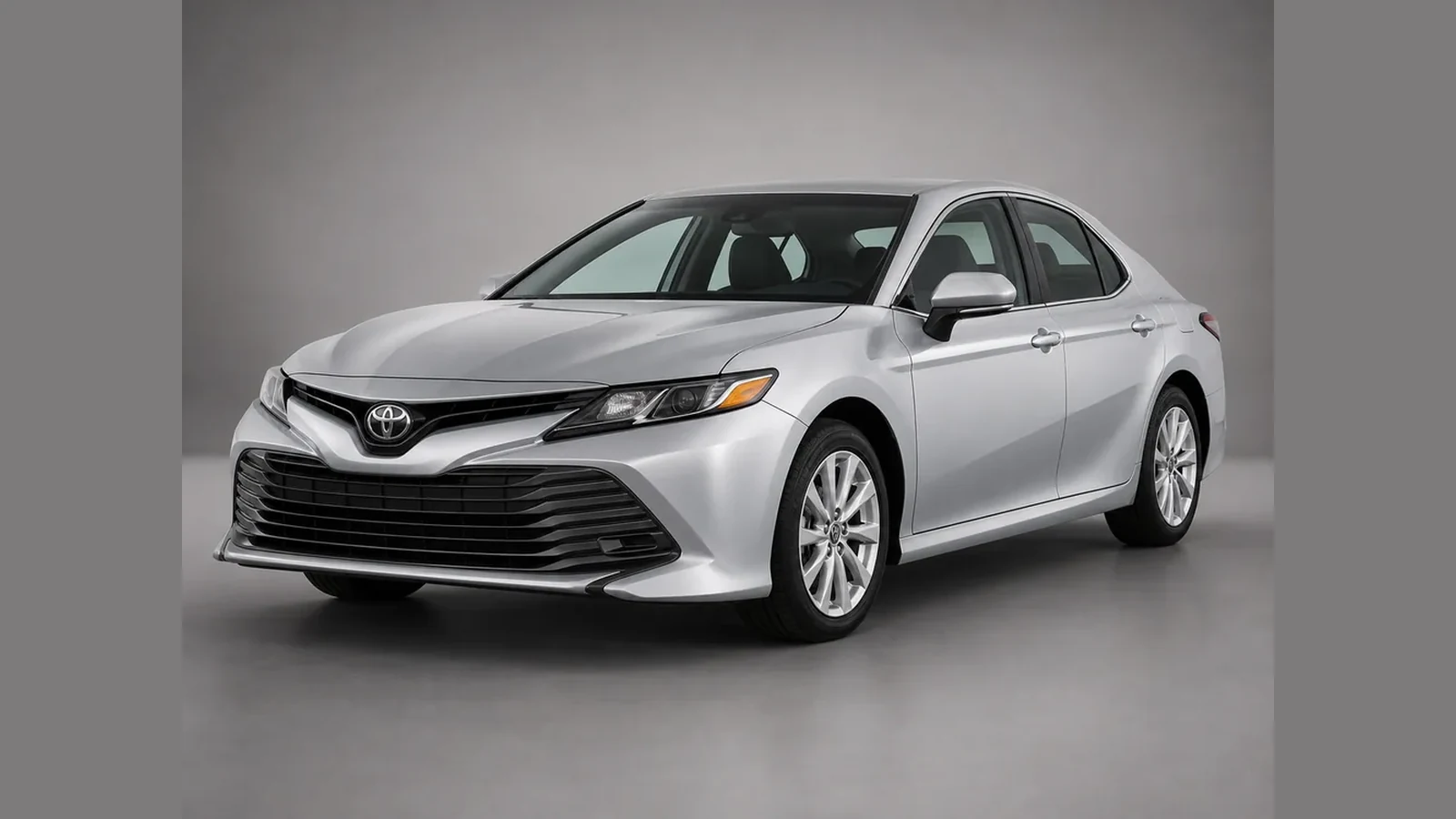
Camry risk shifts from oil use to converter shudder
The Camry's overall record is excellent, which is exactly why the bad years catch buyers out.
RepairPal puts its average annual repair cost near 388 dollars, among the lowest of any midsize sedan, so a shopper assumes any Camry is a safe buy.
That assumption is what turns a cheap late-2000s listing into a four-figure engine bill.
The name carries so much goodwill that a bad-year car can sit on a lot at a fair-looking price and still be the wrong purchase.
For the full picture on this model, read the Camry reliability breakdown before you shop.
The trouble is concentrated in one engine across three model years, and CarComplaints data makes the pattern clear:
- 2007Most-complained Camry ever: 2.4L oil consumption plus brake actuator and ABS light failures
- 2008Rated the worst year: oil consumption repairs average around 2,700 dollars near 107,000 miles
- 2009Same 2.4L oil burning, often surfacing around 96,000 miles
- 2012-2014Solid years, though some cars show a low-speed torque-converter shudder
- 2015-2017Mature seventh-generation years to target
- 2020+Later eighth-generation cars, still subject to VIN-level recall checks
The 2AZ-FE years need consumption evidence
The 2. 4L 2AZ-FE oil consumption problem is the one to fear.
The pistons and oil control rings on this engine carbonize and let the motor drink oil, sometimes a quart every 1,000 miles or less.
Owners who trust the old every-5,000-mile habit can run the engine low between changes, and low oil on this engine is what turns a cheap fix into a replaced motor.
Toyota faced a class-action suit and extended the warranty on affected engines, but that coverage ended on October 31, 2016, so today the repair is entirely on the owner.
| Year or group | Starting verdict | Evidence | Required check |
|---|---|---|---|
| 2007 | Avoid 2.4L cars without proof | Oil use plus brake-actuator complaints | Cold oil level, warning lights, and repair invoices |
| 2008-2009 | Avoid active oil burners | 2AZ-FE piston and ring history | Consumption test and tailpipe smoke |
| 2010-2011 | Inspect carefully | Later 2AZ-FE exposure and aging components | Oil history and engine condition |
| 2012-2014 | Inspect for shudder | Toyota documented U760 torque-converter flex lock-up shudder | Steady 25-50 mph road test and repair record |
| 2015-2017 | Target | Mature seventh-generation drivetrain | Normal age, brakes, and fluid history |
| 2018-2019 | Inspect launch behavior | New eight-speed introduced different shift complaints | Cold and warm low-speed shift test |
| 2020+ | Consider by VIN | Later years offer the shorter repair list | Current recall lookup and service history |
The Camry matrix directs different engines and gearboxes toward different checks. It does not make complaint totals a failure rate.
Move a vehicle forward only when its VIN, repair history, and physical condition support the row.
Steady throttle exposes the 2012-2014 converter
The safest way to avoid all of this is to skip the four-cylinder cars of that era entirely or step past 2011. The 3.
5L V6 of the same generation does not share the oil-burning fault, but it costs more to run and is harder to find clean.
For most buyers the better move is a newer four-cylinder from a fixed year.
If a late-2000s four-cylinder is the only car in budget, treat it like any high-risk used engine: pull the dipstick warm, check the oil level and color, and ask when the last change was.
A car that is a quart low a few hundred miles after a change is telling you the ring problem is already active, and that is a walk-away.
Why 2015-2017 is the mature target
Engine code, oil history, and converter behavior produce a better Camry verdict than a general score.
Pros
- Buy a documented 2015-2017 four-cylinder for a mature drivetrain
- Consider a later Camry after a complete low-speed transmission test
Cons
- Skip a 2AZ-FE car when the seller cannot explain top-off history
Use the filter once those three facts are documented.
The case for the good years is strong. The 2012-2015 cars use a revised 2.
5L four-cylinder with no widespread oil-consumption pattern, and J. D.
Power scored the 2014 an unusually high 92 out of 100 for quality.
The only common gripe on 2012-2014 cars is a light shudder at low speed from the torque converter, which is a service item, not an engine killer.
The 2018-and-newer eighth-generation Camry has been clean since launch, with a stronger 2. 5L and an eight-speed automatic.
Both eras hold their value and take cheap, widely stocked Toyota parts.
If you want a smaller Toyota instead, a Toyota Corolla from the same years is just as dependable, and the Camry against the Civic comparison is worth a read before you commit.
Two-stage oil and transmission testing
Check oil before startup, then drive long enough to test steady light throttle. A 2012-2014 torque-converter shudder often appears during partial lockup rather than during a hard acceleration run.
Toyota's torque-converter bulletin identifies certain 2012-2014 Camrys and the ECM and converter remedy. Confirm the work by VIN and invoice because the old enhancement period is not a current blanket warranty.
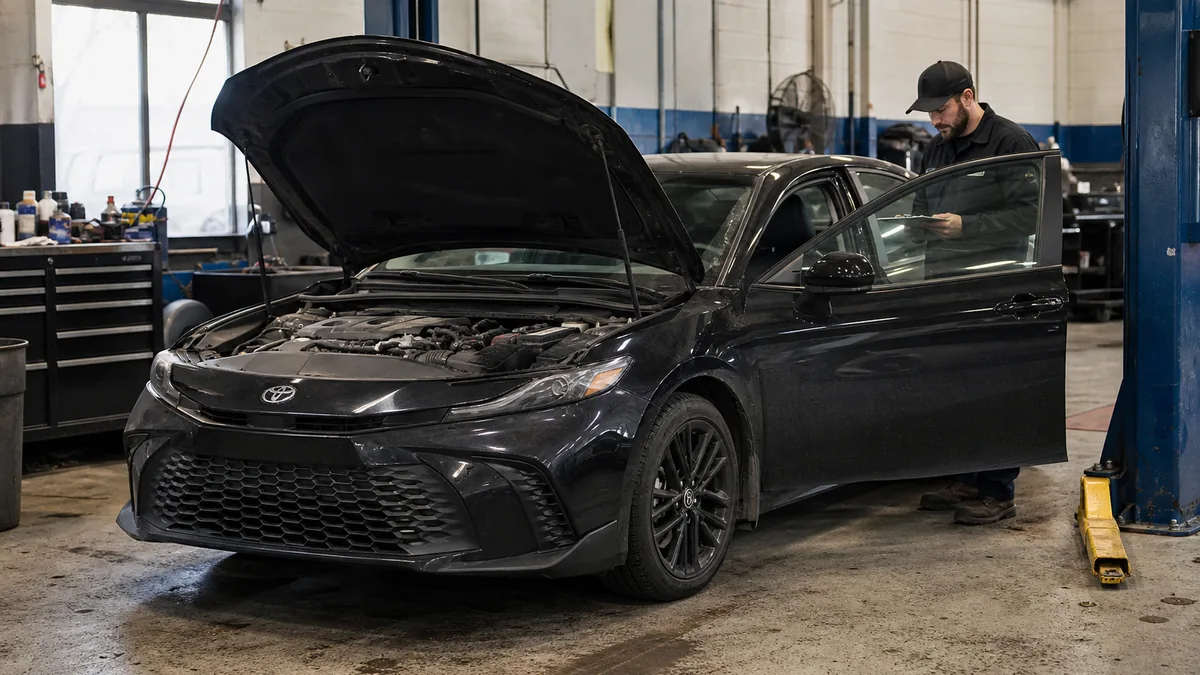
The Camry profile helps separate the 2. 4L oil-use years, later 2.
5L cars, V6 models, and hybrids. Do not transfer a four-cylinder warning to every engine in the same year.
The door label, VIN, engine code, and service invoice should agree before the inspection continues.
An oil-consumption check needs history, not one clean dipstick. Ask how many miles passed since the last change and whether oil was added.
Examine the tailpipe, spark plugs when practical, and the area around the timing cover for leaks that could also lower the level.
For a 2012-2014 car, distinguish tire vibration from converter shudder by changing road surface and holding a steady light throttle.
The gas powertrain field gives useful alternatives when a seller prices a repaired car as if the model year carried no remaining risk.
Test the Camry in two stages:
- Photograph the cold dipstick level before the road test
- Hold steady speed between 25 and 50 mph to feel for lock-up shudder
- Confirm ABS and brake lights complete their startup check
- Scan engine, transmission, ABS, and airbag modules
- Compare the car with the Toyota sedan range and follow the used-car paperwork checks
Missing paperwork does not prove that a repair was unnecessary. Decline the car when oil history or shudder evidence remains unexplained after the road test.
Repair paperwork must match the Camry fault
For a 2007-2009 2. 4L Camry, useful records describe oil-consumption testing, piston and ring work, and the mileage when it was completed.
An oil pan gasket or routine service receipt does not address internal consumption.
Check the dipstick cold, ask when oil was last added, and inspect the exhaust after a warm deceleration followed by throttle.
Stable oil level between documented services carries more weight than a freshly cleaned engine bay.
For a 2012-2014 torque-converter concern, the invoice should identify the converter, software, or bulletin procedure. Toyota's bulletin cited above gives a production and repair context.
A generic transmission flush is not the same remedy.
Hold light throttle at the speed where lock-up occurs, repeat after the drivetrain is hot, and distinguish a rapid shudder from a wheel-balance vibration that changes mainly with road speed.
Evidence by Camry risk
- 2AZ-FE
- Consumption test, piston and ring record, stable level
- 2012-2014 automatic
- Converter or bulletin repair plus clean lock-up test
- Hybrid
- Battery health and hybrid-system scan
- Any Camry
- VIN campaigns, fluid condition, and collision inspection
Price ordinary wear separately from the major fault
A Camry can need engine mounts, struts, tires, brakes, wheel bearings, or A/C work without being a bad model year. List those visible costs after the oil and transmission gates.
That keeps a worn recommended-year car from winning solely on reputation. It also prevents minor suspension noise from being confused with the expensive powertrain question.
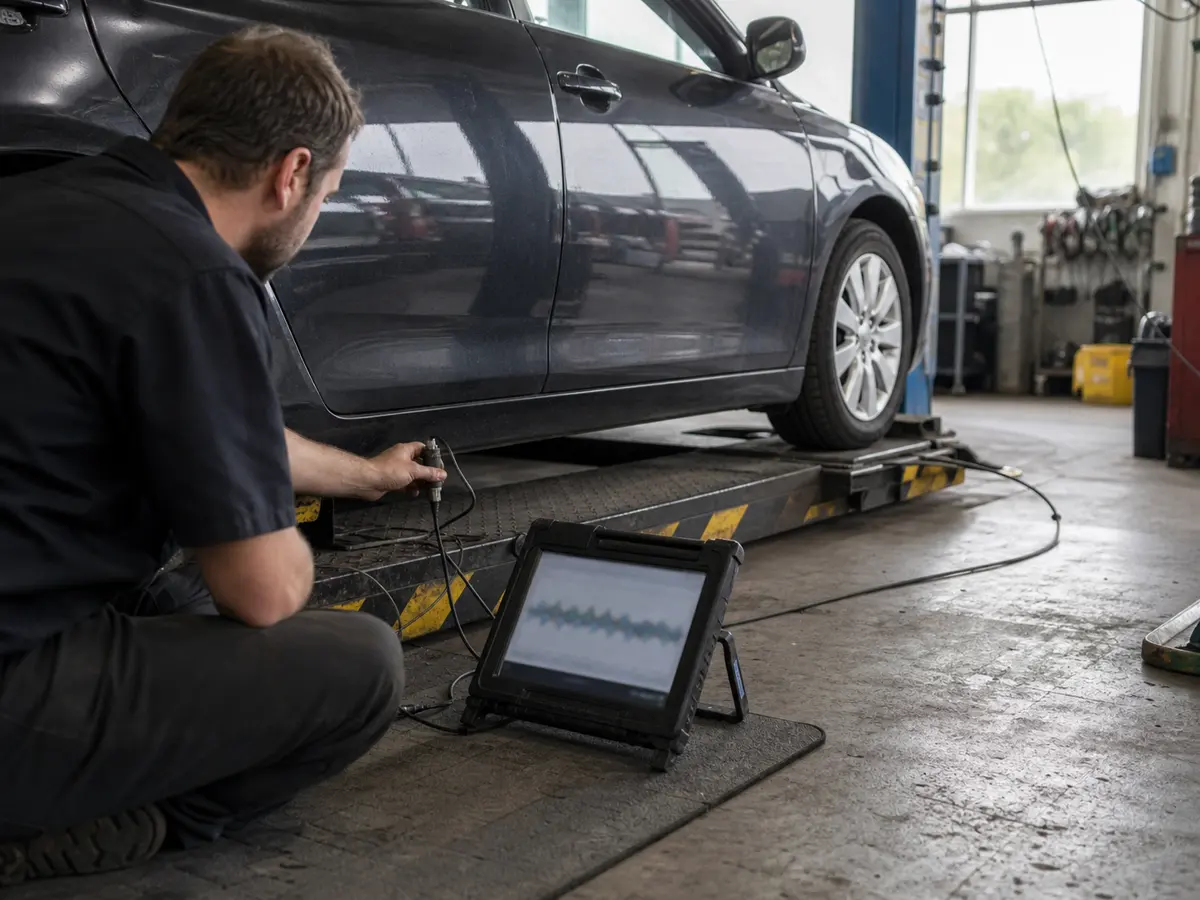
Use a cold inspection, a fully warm road test, and an underbody check. Scan engine, transmission, ABS, airbag, and hybrid modules when fitted.
Verify that the tires match and the car tracks straight. Pay for documented condition, not the assumption that every Camry is equally durable.
A clean 2015-2017 remains the simple target, but the individual car still has to earn the verdict.
Record the Camry inspection in two passes:
- Cold oil level, start-up sound, smoke, leaks, and warning lights
- Warm oil recheck after the road test
- Light-throttle converter lock-up on a level road
- Repeat lock-up after full transmission temperature
- Tire balance, engine-mount, and axle checks if vibration appears
- VIN campaigns and full-module scan results
When oil use remains uncertain, ask for a measured consumption test rather than relying on the absence of smoke.
When shudder appears, a transmission specialist can distinguish converter behavior from tires, mounts, or axles. This prevents one symptom from being assigned to the wrong repair.
A Camry earns its reliability premium when the specific engine and transmission evidence support it.
A hybrid Camry requires a different branch of the inspection. Check hybrid battery health, cooling intake condition, warning history, and brake-system codes instead of copying the gas-only oil and converter list.
The body and year may look similar while the costly systems differ. Confirm the powertrain before comparing prices.
This keeps a strong hybrid record from being weakened by an unrelated gas-engine warning, and it stops a hybrid fault from being overlooked because the gasoline engine starts quietly.
Confirm the source of a Camry vibration before pricing repair
A Camry vibration can come from the torque converter, tires, wheel balance, engine mounts, axles, or an engine performance issue. Note when it occurs.
Converter shudder is associated with a particular light-throttle lock-up condition, while tire vibration usually tracks road speed more consistently. Mount problems often appear during engagement or at idle.
These are starting clues, not a diagnosis.
Ask the shop to reproduce the vibration on the same road and operating condition.
Scan for engine and transmission faults, inspect mounts and axles, check tires, and compare the result with Toyota's bulletin context for the affected years.
Replacing a converter before this separation wastes money when another component is responsible.
Record:
- Vehicle speed, engine speed, throttle load, and temperature
- Whether the vibration stops when throttle position changes
- Tire condition, balance evidence, and axle or mount findings
- Bulletin repair history and current transmission behavior
- Any engine misfire or hybrid-system faults
A named cause turns a vague concern into a repair decision. If the seller will not permit diagnosis, price the car as unresolved or choose another example.
The mature 2015-2017 target still deserves this work when a vibration appears, because a good model year does not identify the source for you.