Mazda
Mazda makes the best-driving mainstream cars, with premium interiors. Browse our reviewed Mazda models.
Mazda is the brand for people who still care how a car feels from the driver's seat.
It prices in line with Toyota and Honda but tunes its steering, its ride, and its cabin to feel a notch richer than the sticker suggests.
The catch is a thin menu of hybrids and no mainstream electric car in the core lineup yet.
Here is what the badge gets you across the two models reviewed here, and who should look elsewhere.
What you actually pay for with a Mazda
Mazda competes on driving feel instead of the spec sheet.
Where a rival chases the biggest screen or the longest hybrid menu, Mazda spends its money on how the steering weights up, how the body settles over a bump, and how the cabin looks and sounds when you shut the door.
A mainstream Mazda often drives and feels like something from a class above, at a mainstream price.
The trade is fewer electrified choices than Toyota or Honda, so a low fuel bill is not the brand's strong suit. Both models here run on gas alone.
If a hybrid or electric drivetrain sits at the top of your list, start with the Toyota lineup instead.
The MX-5 Miata is the cheapest way into a real roadster
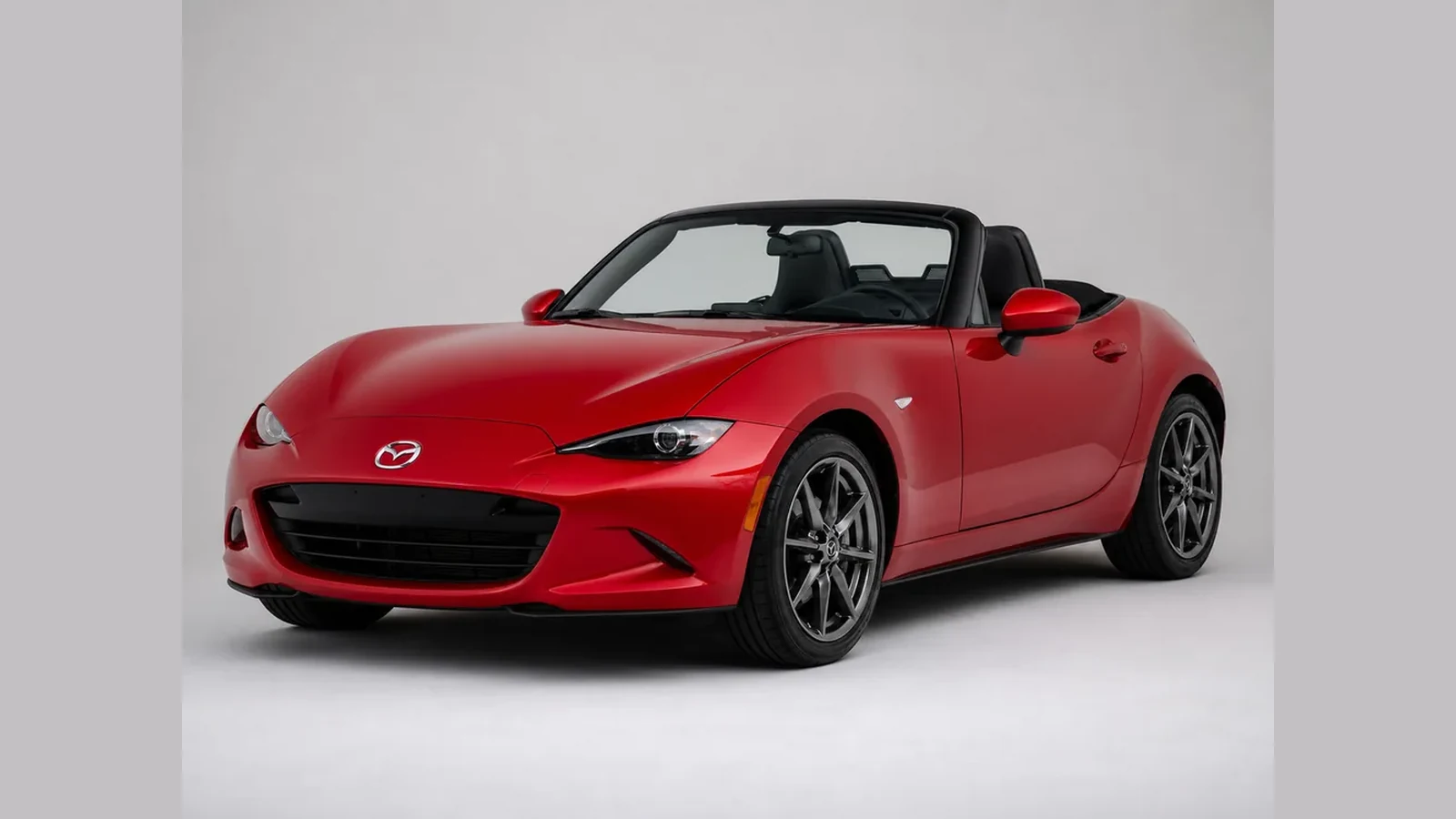
The Mazda MX-5 Miata is a two-seat, rear-wheel-drive convertible that starts around $29,000 and tops out near $37,000.
That makes it the most affordable proper sports car you can buy new, a spot it has held for more than thirty years.
The Miata wins by staying light and simple rather than piling on power.
Its low curb weight makes it feel quick and playful at legal speeds, where a heavy, high-horsepower car only comes alive on a track.
It returns 26 mpg city and 34 mpg highway, so the fun costs little at the pump.
If you want the drop-top and the driving thrill without a luxury-car price, the Miata is the default answer.
Shop it against every open-top option on the convertible list, or see where it ranks among the most fun-to-drive cars. It is also one of the few true two-seaters left under $40,000.
The CX-5 is the compact SUV for people who like driving
Not everyone can live with two seats and a trunk the size of a carry-on.
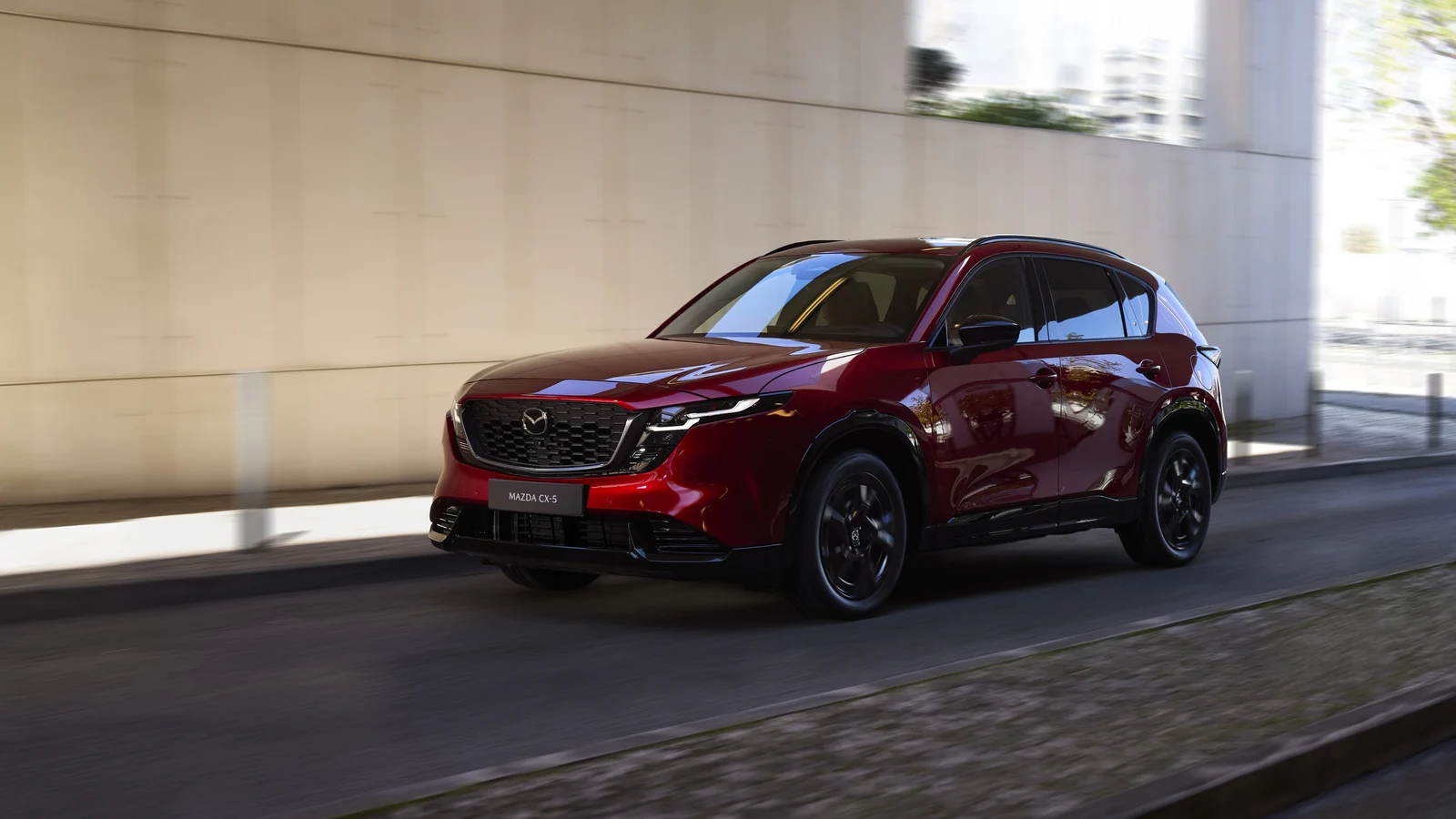
The Mazda CX-5 takes that same handling focus and puts it in a five-seat compact SUV that starts around $30,000 and runs to about $40,000 loaded.
The CX-5 competes with the Honda CR-V and Toyota RAV4, but it drives with more precision than either.
The steering is quicker, the body leans less through corners, and the cabin is quieter at speed.
The trade is space and fuel: the CX-5 has a slightly smaller cargo hold than the class leaders, and its 24 mpg city and 30 mpg highway trail the hybrids those rivals offer.
Compare it across the full SUV category to judge the space gap for yourself.
The trade: fewer electrified options
Mazda's weak spot is the fuel-and-plug question. Toyota and Honda will sell you a hybrid version of most family models, and the market is filling out with electric SUVs.
Mazda's core sellers, including both cars here, still run on gas alone.
Pros
- Sharper steering and body control than mainstream rivals
- Interiors that look and feel a class above the price
- Lower up-front price than most premium-badged cars
Cons
- Fewer hybrid choices than Toyota or Honda
- No mainstream electric option in the core lineup
- Slightly less cargo room in the CX-5 than the class leaders
If your top priority is a low monthly fuel bill, a hybrid model from another brand will likely cost less to run.
If driving feel and cabin quality matter more, the Mazda earns its keep.
Interiors that punch above the sticker
Mazda's cabins are the quiet reason many buyers switch.
The materials, the layout, and the sound of the controls feel closer to an entry-level luxury car than to the mainstream price on the window.
This shows up most in the CX-5, where soft-touch surfaces, real stitching, and a clean dashboard beat what Honda and Toyota put in the same bracket.
The Miata keeps its cabin simple and driver-focused, with everything angled toward the person behind the wheel.
For a buyer who spends real time in the car, Mazda's interior quality is often the deciding factor over a cheaper-feeling rival.
Who should buy a Mazda
Pick a Mazda when the drive and the cabin matter more to you than the widest hybrid menu or the strongest resale number.
| Model | Best for | Powertrain |
|---|---|---|
| MX-5 Miata | Weekend driving thrills, open-top fun | Gas, rear-wheel drive |
| CX-5 | A family SUV that still handles | Gas, all-wheel drive available |
Choose the MX-5 Miata if you want an affordable sports car and can live with two seats.
Choose the CX-5 if you need five seats and daily practicality but refuse to give up steering feel.
If a low fuel bill or a hybrid drivetrain outranks all of that, cross-shop a Toyota before you sign.
How we review Mazdas
Every Mazda profile here is scored on the same measures as its rivals: real fuel economy, driving dynamics, interior quality, reliability history, and five-year cost to own.
We read EPA and NHTSA data alongside long-term reliability records, and a reviewing expert signs off on the buying advice before it goes live.
Start with the model that fits your job above, or line the Miata up against the field on our best fun-to-drive cars list to see how it holds up.
Frequently Asked Questions
Is a Mazda as reliable as a Toyota or Honda?
Is the MX-5 Miata a practical daily driver?
Does Mazda make a hybrid or electric car?
Why does the CX-5 cost about the same as a CR-V but feel nicer?
Which Mazda should I buy?
See how Mazda stacks up
Put these models against their rivals side by side, then read the full research-first review before you buy.
Compare cars