
Minivans
Minivans remain the most space-efficient family vehicle, with sliding doors and flexible seating. Browse our reviewed minivans.
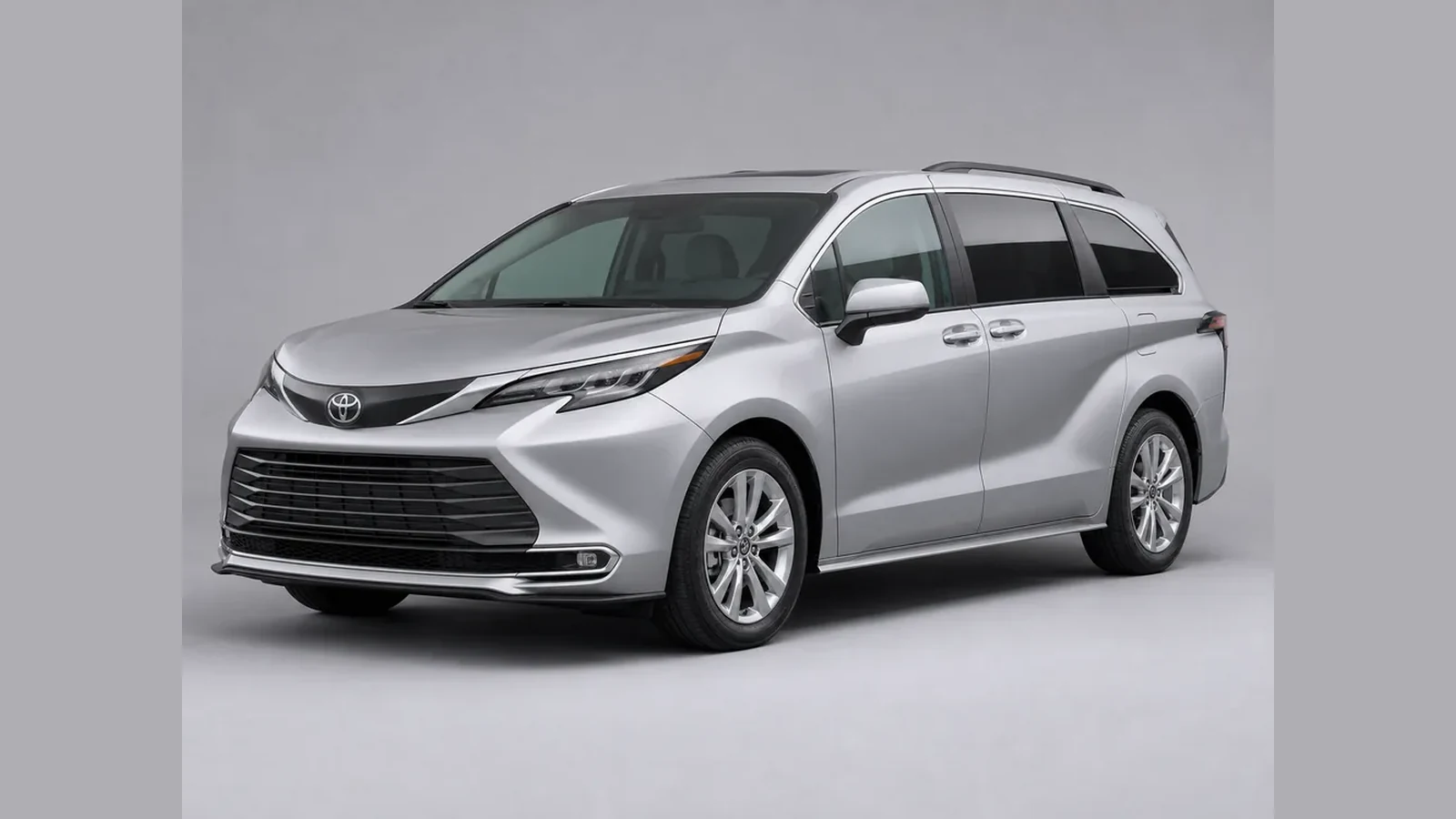
A minivan is the most honest family vehicle on sale.
It hides no compromise behind a rugged badge or a raised ride height: it exists to move up to eight people and their gear with the least wasted space and the least effort getting in and out.
Buyers keep drifting to three-row SUVs for the image, then discover the van they skipped does the same job with more room and less fuss.
Here is what the shape gets you, and where the one van we review, the hybrid Toyota Sienna, fits.
Sliding doors change daily life
The defining feature of a minivan is the door, and it matters more than the spec sheet suggests.
A sliding door opens straight back on a track instead of swinging out, so it clears zero space beside the van.
In a tight garage or a packed parking lot, a child can open the door fully without banging the car parked next to you.
That track also puts the opening low and wide.
Loading a car seat, a stroller, or an older relative means stepping through a tall gap rather than ducking under a swung door.
On a school run or a grocery trip you use the sliding door dozens of times a week, and that is where a minivan quietly beats a three-row SUV.
Power sliders on the Toyota Sienna open from the key fob or a kick under the sensor when your hands are full.
A flat floor and seats that fold flat
Minivans are built low and boxy for one reason: usable space.
The floor sits close to the ground with no transmission tunnel humping through the middle, so three across the second row is genuinely comfortable and the third row is a place adults will sit, not a punishment.
The seats are the other half of the story.
Third rows fold flat into a floor well, and second-row chairs slide, recline, or come out to open a cargo bay a compact SUV cannot match.
You do not choose between people and cargo the way you do in a smaller vehicle: you carry seven or eight passengers, or you fold the back and haul plywood.
A minivan seats as many as a 7-seater SUV while giving each row more legroom.
Minivan versus a three-row SUV
This is the comparison almost every minivan buyer actually makes.
A three-row SUV sells on looks and a higher seating position, but it pays for that styling with a sloped roof and swing doors that eat into the space inside.
| Measure | Minivan | Three-row SUV |
|---|---|---|
| Rear doors | Sliding, clear the body | Swing out, need side room |
| Third-row adult space | Roomy, easy to reach | Tight, awkward to climb into |
| Cargo behind third row | Large, deep well | Smaller, shallow |
| Step-in height | Low, easy for kids | Higher, harder for car seats |
The SUV wins on ground clearance and the option of serious all-wheel-drive traction, which matters if you tow or drive rough roads.
For everyone whose weekend is a soccer game and a big-box run, the van carries more, loads easier, and often costs less to fuel.
Compare the shortlist on our best family SUVs page if you are still torn between the two shapes.
The hybrid makes the running costs work
The old knock on minivans was thirst. A big box pushing a lot of air used to drink fuel, which pushed families toward the very SUVs that carried less.
The Sienna answers that directly by going hybrid-only, with no plain gas version to tempt you.
Thirty-six mpg in a vehicle this size is the number that changes the math.
It is close to what a much smaller crossover returns, and it holds up in city traffic where a heavy SUV suffers most.
The hybrid system also makes the van quiet and smooth around town, gliding on electric power at low speed.
A hybrid minivan gives you three-row space at compact-crossover fuel economy, which is the trade that wins buyers back from SUVs.
The Sienna runs front-wheel drive as standard, so most of its weight works for traction and efficiency rather than a heavy driveline.
What it costs and who should skip one
Minivan pricing lands in mainstream family-car territory. The Toyota Sienna runs from about $39,000 to $53,000 depending on trim, which sits alongside a well-equipped three-row SUV rather than below it.
Pros
- Most passenger and cargo space per dollar
- Sliding doors that a tight garage rewards
- Hybrid economy the Sienna makes standard
- Low floor that car seats and kids love
Cons
- Higher entry price than a compact crossover
- Boxy looks that not every buyer wants
- No true off-road or heavy-tow ability
Skip the van if you rarely fill the back two rows, or if you need real ground clearance and towing muscle. For those jobs a truck-based body style earns its keep.
But if you move people and gear most days, a minivan gives you more usable room for the money than any other shape, which is why it remains the space-efficiency benchmark other family vehicles are measured against.
Why the Sienna anchors this category
We review one minivan in depth, and it is a fitting stand-in for the class.
The Sienna comes from Toyota, the brand with the deepest hybrid history and among the strongest resale in the business, so the fuel savings are not offset by a weak trade-in later.
It also shows what the modern minivan has become: a hybrid-only, low-floor, sliding-door hauler that seats seven or eight and sips fuel doing it.
Read the full Sienna review for trim-by-trim detail, and browse the wider hybrid lineup if low running costs sit at the top of your list.
How we review minivans
Every vehicle profile here is scored on the same measures: real fuel economy, passenger and cargo space, reliability history, and five-year cost to own.
We read EPA fuel-economy figures and NHTSA safety data alongside long-term reliability records, and a reviewing expert signs off on the buying advice before it goes live.
Start with the Sienna review for the worked example, then weigh it against a three-row SUV to see how much space and how much fuel the two shapes really trade.
Frequently Asked Questions
Why choose a minivan over a three-row SUV?
How many people does a minivan seat?
Is the Toyota Sienna a hybrid?
How much does a minivan cost?
Compare before you commit
Line up two cars you are cross-shopping side by side, then read the full research-first review before you buy.
Compare cars