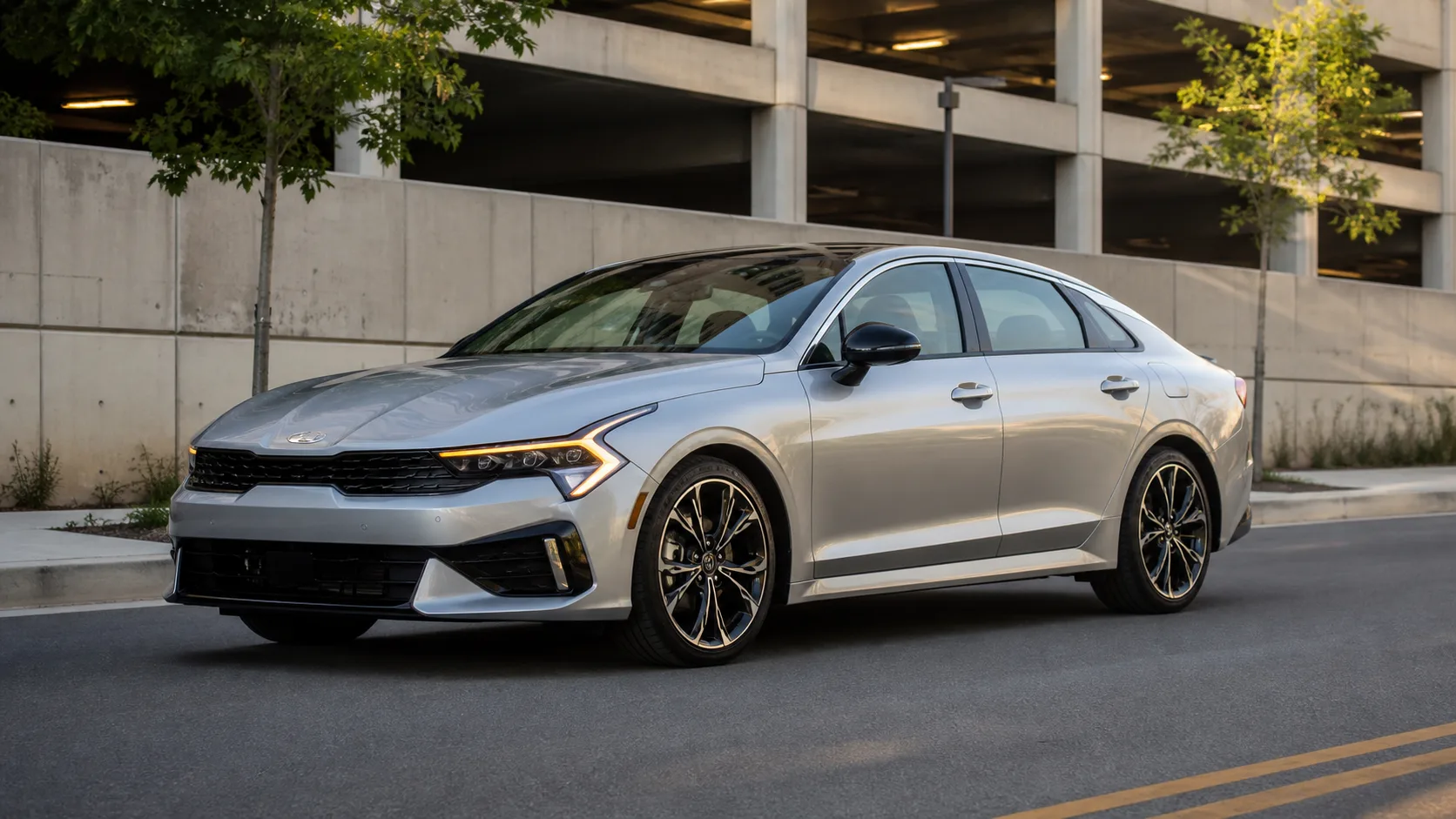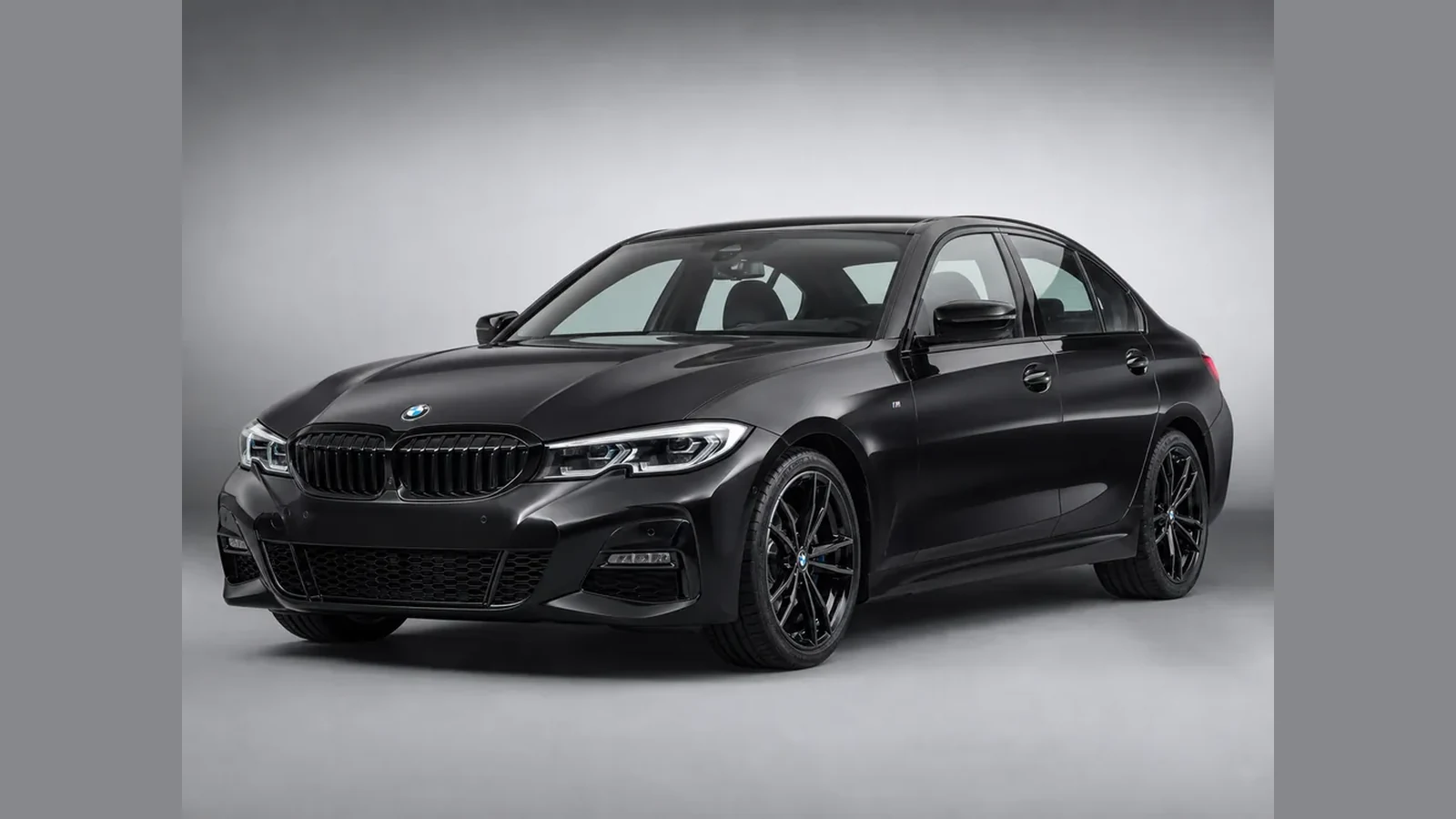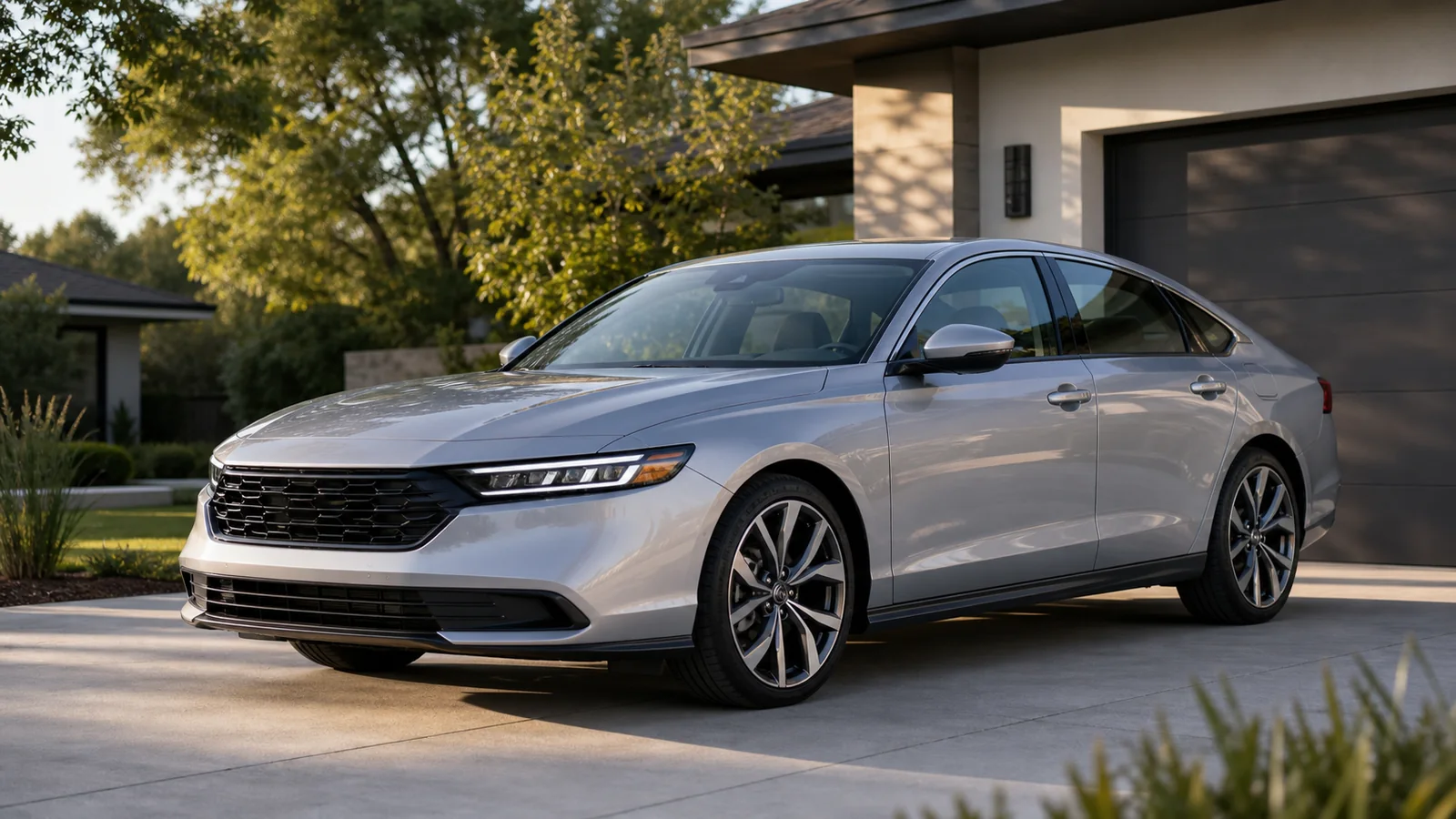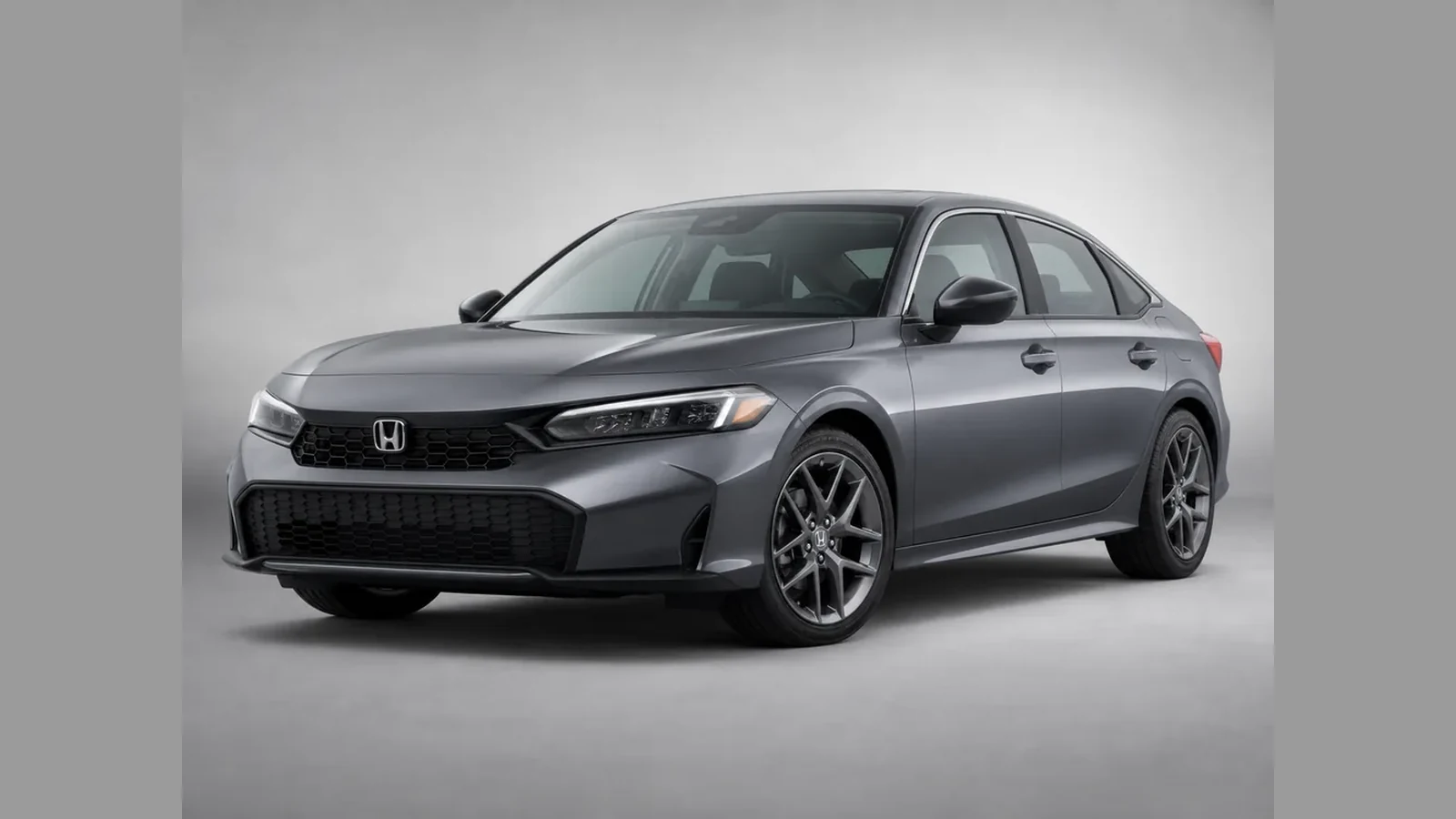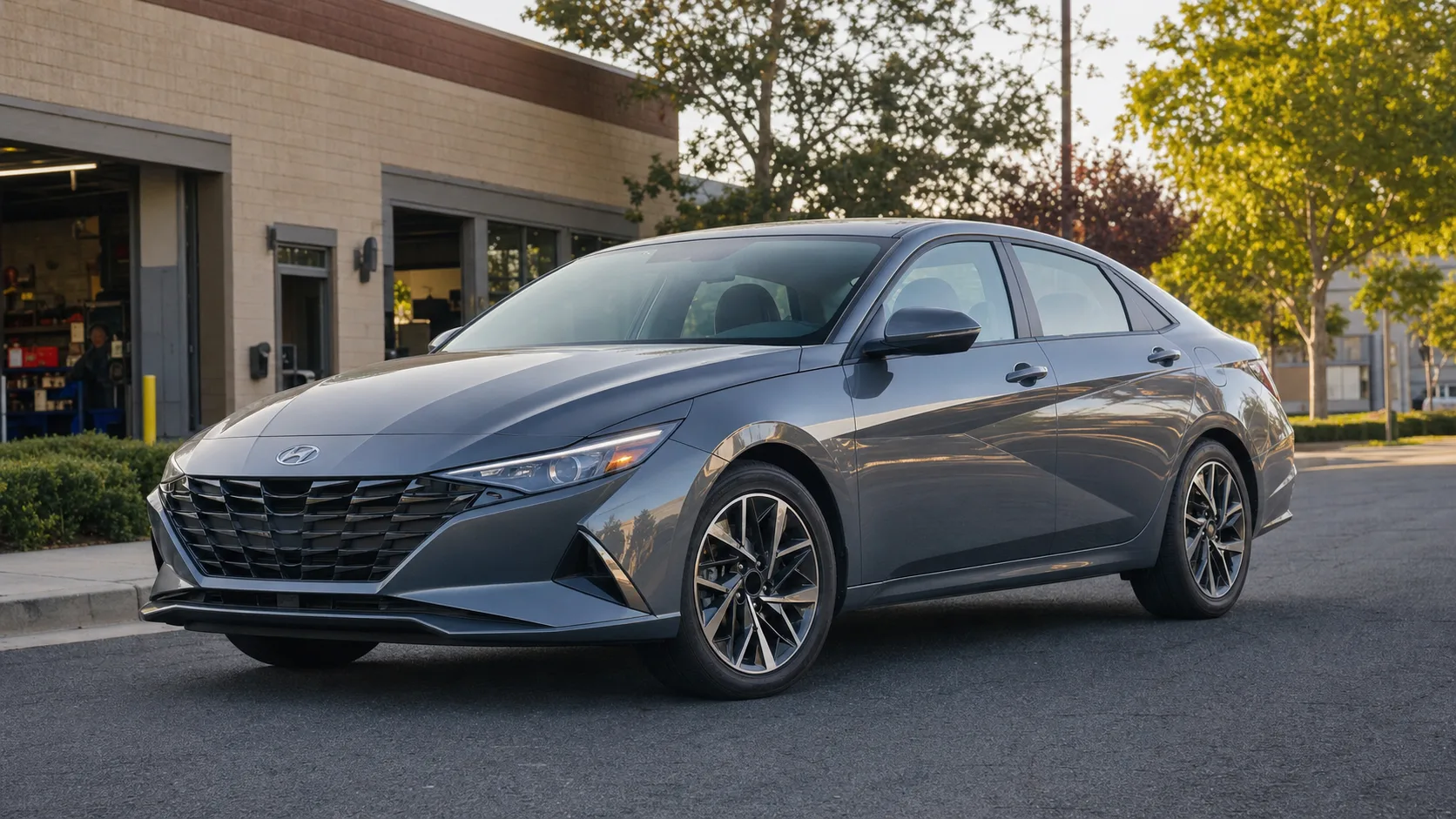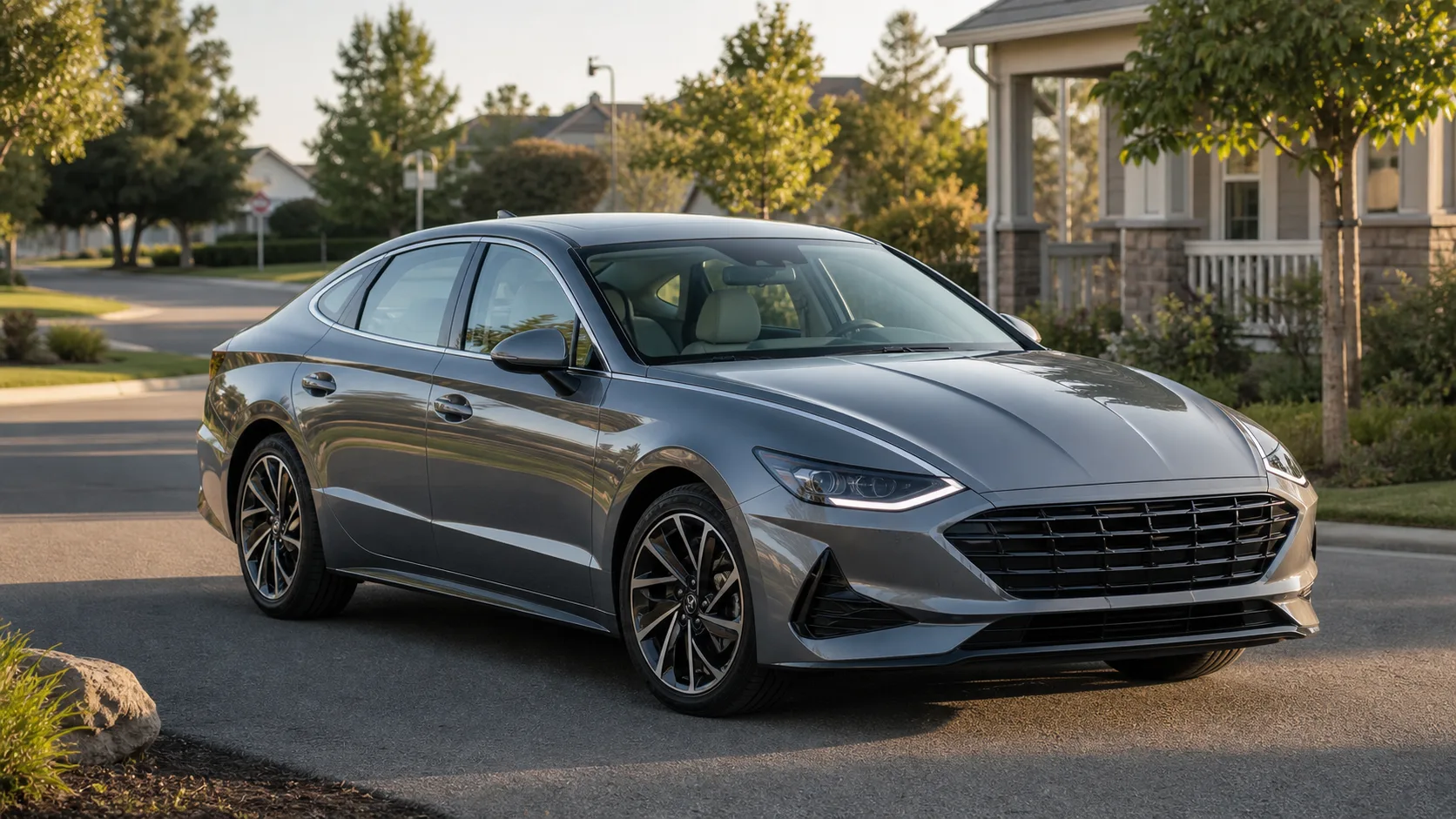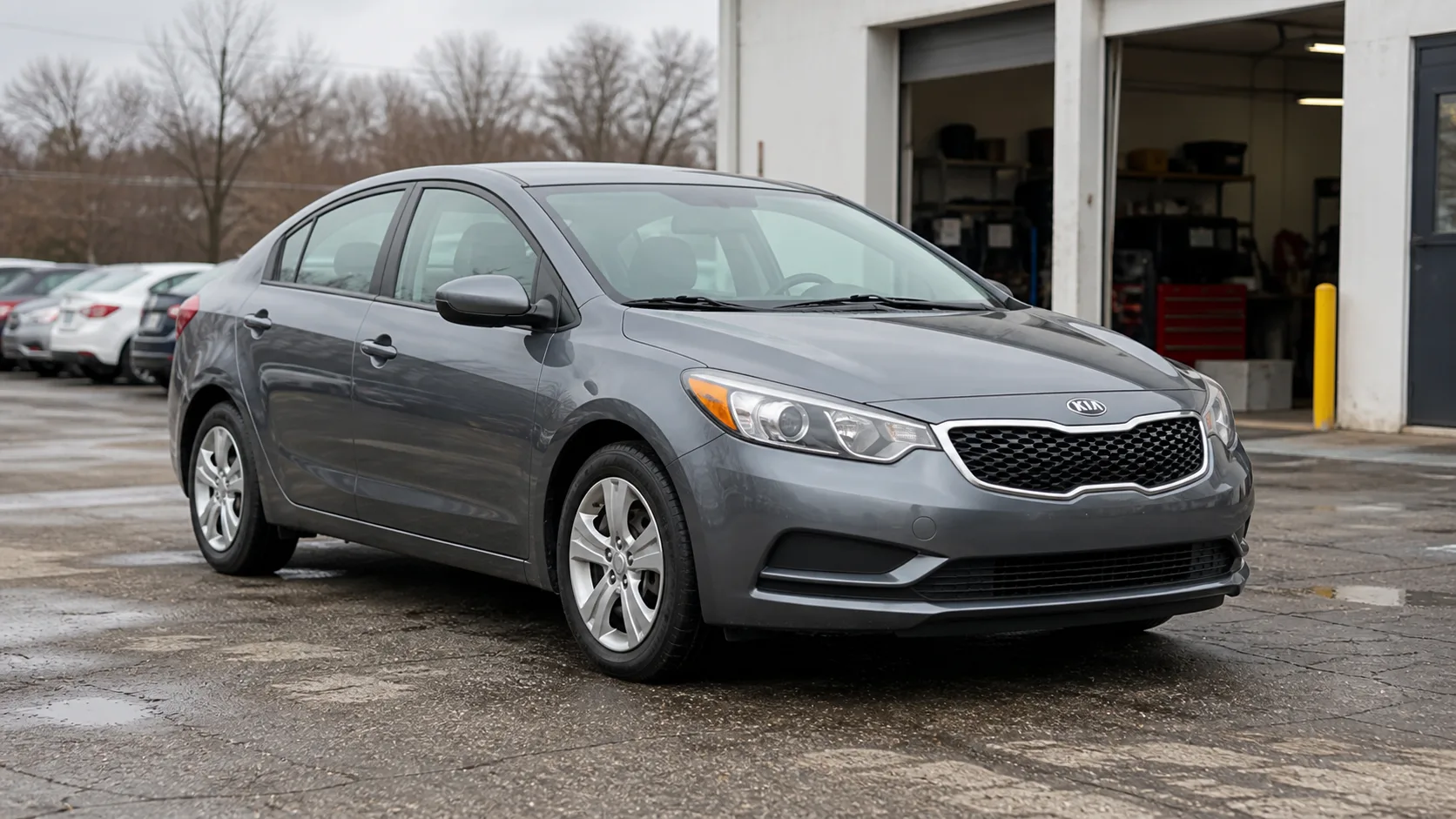
Why a Forte is now a used-market math problem, not a new-car pick
The Forte stopped being a new-car decision after 2024, when Kia ended it in the U.S. and handed the compact-sedan job to the K4.
So your task is not to pick the newest Kia sedan.
It is to work out whether one used Forte is cheap enough to beat the newer compacts you could buy instead.
That shift is the whole reason to read the car differently.
A current Corolla or Civic shopper compares trims, while a Forte shopper compares a price gap, because the badge is winding down and the discount is where the value lives.
None of this makes the Forte a weak car. When new it gave you a roomy trunk, simple controls, strong fuel economy on the 2.
0L engine, and a long Kia warranty, and the GT added a real 201 hp turbo for less than most sporty compacts asked.
The version most used shoppers meet is the BD-generation Forte sold from 2019 through 2024, the last and most modern chapter of a run that started back in 2008.
We still score it on the things a used-value buyer actually weighs, because condition and price matter more than the badge now.
Those middle numbers are the honest catch.
Warranty terms and resale demand both soften once a nameplate is replaced, so a Forte has to hand you more discount than a current-model compact to make up for it.
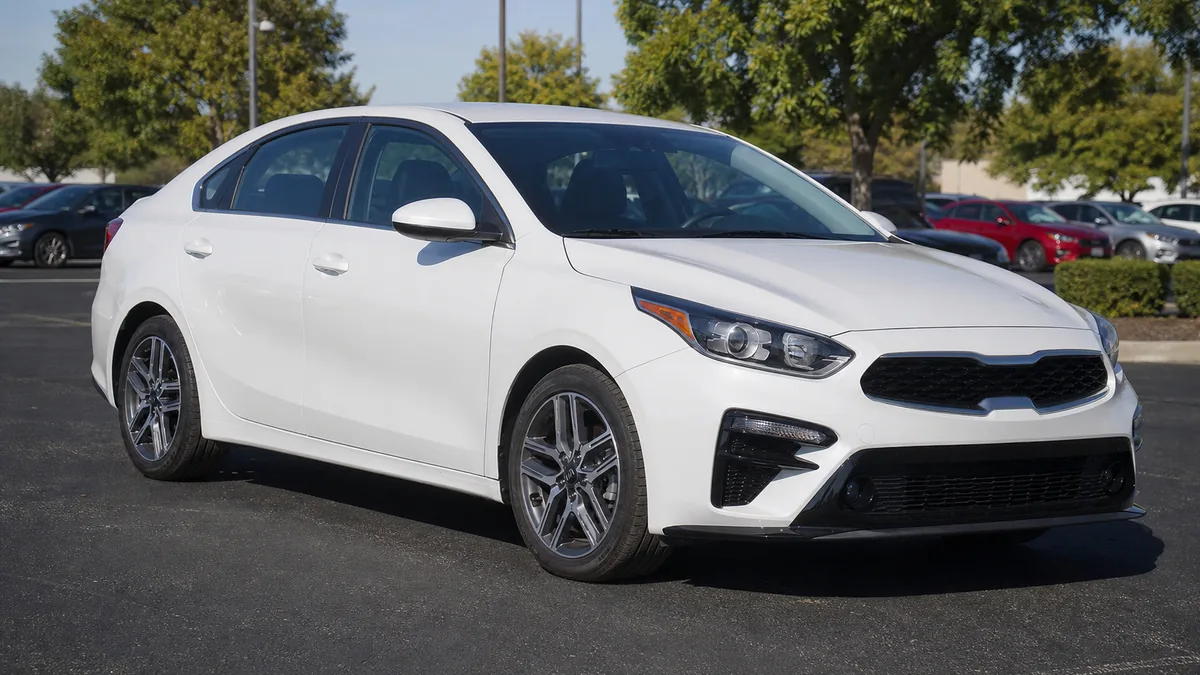
The Kia brand hub tells the same value story across the lineup, so the question here stays narrow.
As a used compact sedan it still parks easily and sips fuel, and those everyday strengths carry to the used lot unchanged.
Buy a Forte because a clean one is clearly cheaper than the newer compact you would otherwise sign for, not because it wears a Kia badge.
How deep a discount the discontinued badge has to earn
The Forte's value rests on one number the seller rarely volunteers, the gap between its price and the newer compacts sitting on the same lot.
Get that gap wrong and the discontinued badge works against you instead of for you.
Start the math from the replacements. A used Forte has to sit clearly under a newer Hyundai Elantra that carries similar warranty logic and a fresher cabin.
It also has to undercut a used Toyota Corolla, because the Corolla holds resale better and hands you an easier exit when you sell.
| Rival on the lot | Why it presses the Forte | Discount the Forte needs |
|---|---|---|
| New or newer K4 | Roomier cabin and current-model support | A large cash gap, not a few dollars a month |
| Newer Elantra | Similar warranty story, fresher tech | A clear margin per month after the rate |
| Used Corolla | Stronger resale at trade-in time | Enough to offset weaker demand later |
| Used Civic | Better driving feel and cabin polish | Enough that you pay for value, not feel |
A thin discount is the trap.
If a Forte lands only a little below a new K4 or a newer Elantra once you fold in the finance rate and any incentives, the older car has no advantage left to give.
For a sense of the ceiling, the Forte listed new from about $19,990 to $25,390, so a used one has to fall well under those numbers to read as a real deal against today's compacts.
Used value is never the asking price alone.
It is that price plus the coverage you inherit, the condition you accept, and the resale demand you will face, so a cheap sticker riding on tired tires is not really cheap.
When the deal is only a small monthly saving, the honest move is to shop a budget compact elsewhere and let the Forte seller come back with a better cash number.
Demand a real discount for the age and the discontinued name, because a Forte priced like the current compact class gives you no reason to skip the current compact class.
The leftover Kia warranty, and verifying it by VIN
The single biggest lever on a used Forte is the leftover Kia warranty, and it is also the easiest place to get talked into paying for coverage the car may not carry.
Kia's original terms were generous, yet the promise follows the exact car and its owner history, not the badge on the trunk.
That matters because the well-known 10-year or 100,000-mile powertrain coverage is often reduced for a second or third owner.
A seller waving that number is quoting the first-owner deal, which may not be the deal you inherit.
Run the check as a price tool rather than a formality. If the coverage is real and transferable, it can justify a slightly higher price than a rival with none left.
If the coverage is thin or already reduced, you price the Forte as if it has none and lean harder on the discount instead.
The calendar drives this too, because a 2019 or 2020 car has already spent several of its warranty years, leaving less to transfer than a 2023 or 2024 example.
That reduction is not a defect, it is only the value math changing, so treat any leftover coverage as a bonus you confirm rather than a headline you trust.
The warranty question also shapes how the Forte stacks up against a newer car.
A newer Elantra or K4 may start a fresh owner deeper into its own coverage, which is part of why the Forte needs a stronger cash gap to stay ahead.
Weigh that coverage against how long you plan to keep the car, the same way our new-versus-used guide costs a warranty against the years you actually drive.
A verified transfer is a genuine advantage, and an unverified one is just the seller's uncertainty dressed up as your bonus.
The two used Fortes: the plain 2.0L or the GT bargain
A used Forte really comes in two flavors, and choosing between them is the closest thing to a trim decision this car still asks.
One is a plain commuter, the other is a cheap sport compact, and they get inspected and priced in completely different ways.
Most Fortes use a 2. 0L four-cylinder with 147 hp and an IVT automatic, which is the practical, low-cost version.
The Forte GT swaps in a 1. 6L turbo with 201 hp, paired with a dual-clutch automatic or, on some cars, a 6-speed manual.
The 2. 0L car is the one to judge as transportation.
It does not need to feel quick, it needs to start cleanly, shift smoothly, track straight, stop evenly, and return its rated economy on your commute.
That roomy 15.3 cubic foot trunk is a real reason the plain car works, and it lets a cheap Forte serve as a budget second car for a household.
Rear-seat space is usable rather than generous, and a Civic or the newer K4 feels more grown up back there, so sit an adult behind an adult before you assume it fits your family.
The GT's 7-speed dual-clutch also behaves differently from a normal torque-converter automatic at low speed, and a slight hesitation in slow crawls is normal for the type rather than a fault.
| Version | Best reason to choose it | Watch for |
|---|---|---|
| LX or LXS | Lowest used price and simple commuting | Fewer comfort features on cheap listings |
| GT-Line | Better equipment without turbo cost | Payment can overlap a newer rival |
| GT DCT | Stronger acceleration for the money | Dual-clutch smoothness and tire wear |
| GT manual | The most driver involvement | Clutch condition and hard previous use |
Confirm the exact trim before you fall for a price, because blind-spot alerts, adaptive cruise, and Highway Driving Assist are not on every Forte.
A cheap listing can be missing the safety features you assumed were standard.
The GT is the only version that changes the car's character, and it should be bought on purpose.
If a cheap turbo compact is what you wanted, cross-check it against our fun-to-drive list and be honest about the insurance.
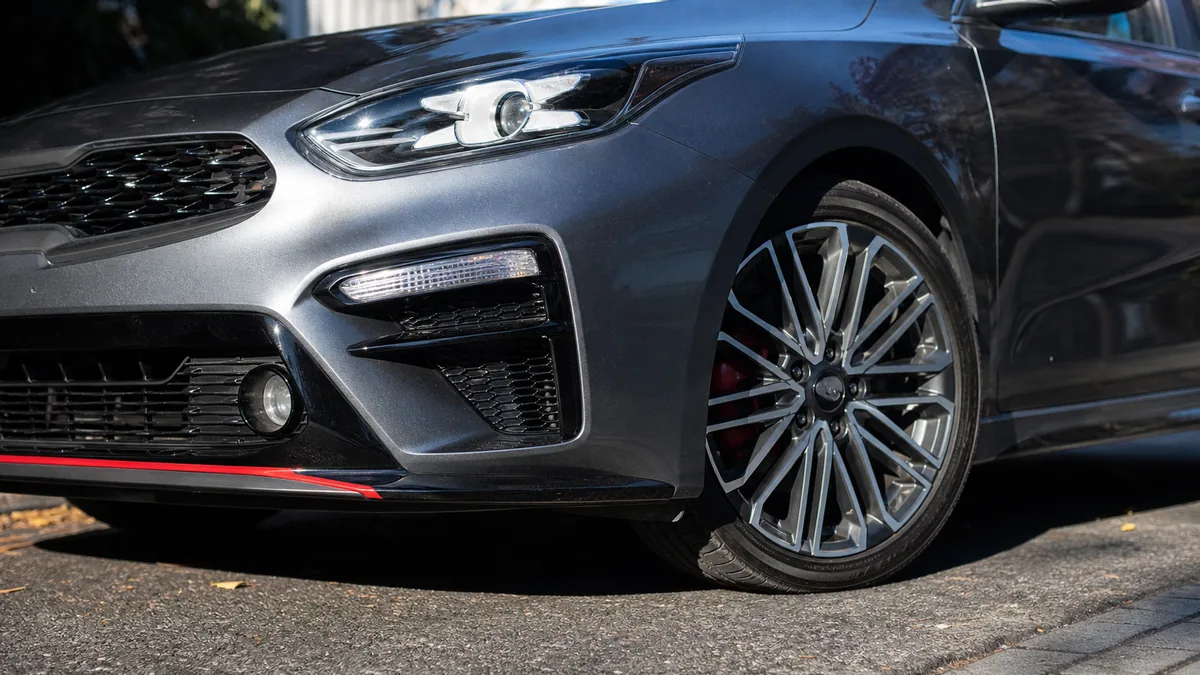
A sharper-driving rival like the Honda Civic is the natural cross-shop once the GT tempts you.
The closely related Kia K5 shares much of the same turbo engineering one size up, so drive it before you decide the GT is the sportiest thing you can afford.
Pick the 2. 0L when you want boring, cheap miles, and pick the GT only when you wanted the turbo before you opened the listing.
The used-Forte test drive that protects the bargain
A clean Forte and a cheap Forte are not the same car, and the test drive is where you tell them apart.
The checklist bends around the transmission and the tires more than the odometer, because those are the parts a low price tends to hide.
Start cold. The IVT on a 2.
0L car should feel smooth from a cold start, and holding revs under hard throttle is normal, while shudder, delayed engagement, or a warning light is not.
A GT needs a colder eye still.
A dual-clutch should move predictably in slow traffic without harsh bucking, and a manual should not slip when you accelerate in a high gear at low rpm.
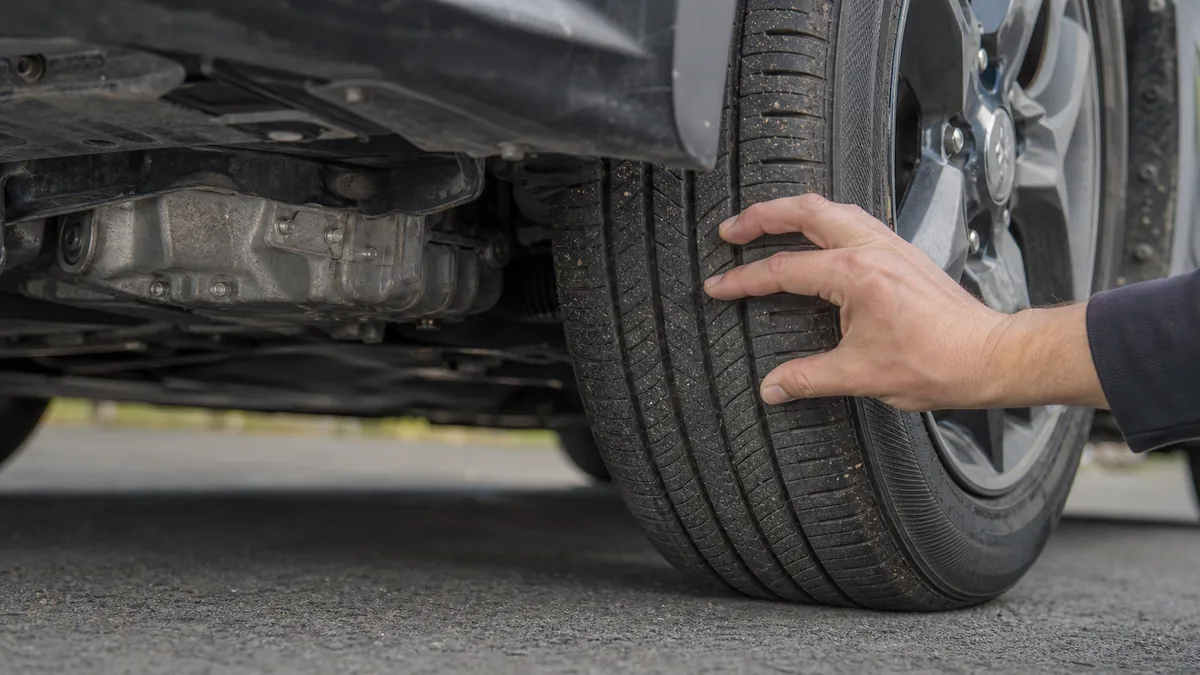
Work the rest of the car like any budget compact, because small neglected items make a used car feel old fast. Run this short list on every Forte you drive:
- Check IVT or DCT smoothness cold, then again once warm
- Inspect GT tires for uneven wear or cheap mismatched replacements
- Listen for suspension noise over broken pavement
- Test every driver-assist feature the trim claims to have
- Confirm service records and recall completion by VIN
Do not pay a premium for a low odometer until you read the tire date codes and the service dates, because tires age, batteries weaken, and rotors rust even on a low-mile car.
A pre-purchase inspection still pays on a cheap car, because a few hundred dollars of catch-up work can erase a bargain in the first month of ownership.
Cosmetic clues tell you how the car was treated. Wheel rash, cheap tint, rough paint, and worn key fobs all hint at an owner who skipped the boring maintenance.
The small stuff stacks up on a budget car, so sniff the cabin filter, feel for brake pulsation, and note a weak battery or missing floor mats, because those neglected items turn a cheap car old in a hurry.
Worn or mismatched tires are a price problem, not a maintenance tip, so fold a full set into the offer and use our tire pressure routine only once the car is yours.
A plain gas compact rewards this patience, because the cheapest Forte to own is the one that needs nothing in its first month.
If the test drive turns up rough shifting or a mystery GT tune, walk, because the discount rarely covers what those hide.
What a used Forte really costs after you drive it home
The Forte only stays a bargain if the first year of ownership stays cheap, and that bill starts the day you drive it home.
Fuel, insurance, tires, and a first-month reserve decide the real cost more than the asking price does.
Fuel is the easy win on the 2. 0L car, with the best 2024 ratings reaching 30 mpg city and 41 mpg highway in LX form.
A GT trades some of that economy for power, which is fine only if the power is what you were buying.
First-year used Forte reserve
- Tires
- Price a full set before you sign
- Brakes and alignment
- Budget an inspection and likely catch-up
- Battery and fluids
- Assume a test and a baseline service
- Registration and scan
- Add fees and a diagnostic read
Build that reserve into the deal, not your hopes.
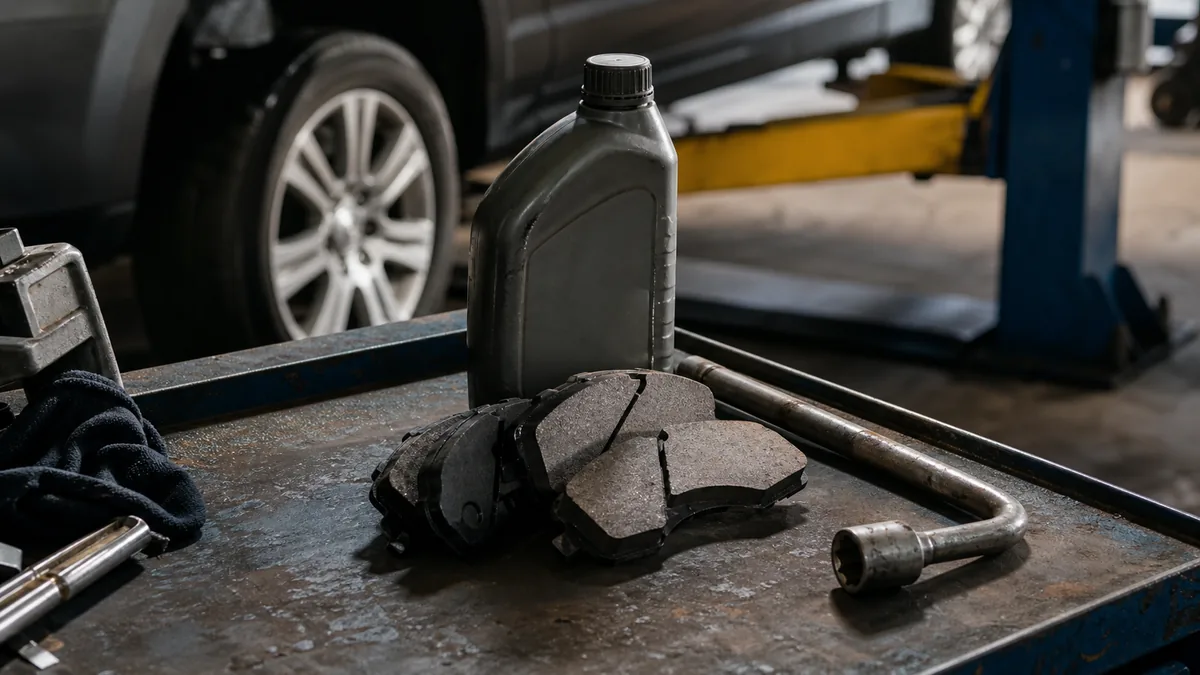
Assume tires, oil, filters, alignment, a battery test, a brake inspection, and registration until the records prove otherwise, and if the budget cannot carry that reserve the car is too expensive even at a low sticker.
Insurance deserves its own quote by VIN, because a cheap purchase price does not promise a cheap premium, and young drivers and GT trims can both surprise you.
Resale is the line to plan around, since a discontinued name can soften demand.
Buy lower, keep every receipt, and hold the car long enough that resale matters less than the cheap miles it gave you.
The best plan is to make the car boring after you buy it, fixing the small gaps early, keeping the good tires on it, and skipping any modification that would make the next buyer nervous.
A small monthly payment can still hide a long term, a high rate, or dealer add-ons, so read the whole finance cost the way our lease or buy guide frames it.
Protect the deal with two cheap habits before you sign. Confirm the car will jump start cleanly if the battery is older.
Check that its oil changes were done on time, because a skipped service history is a discount you should ask for. The cheapest Forte to own is a boring, well-kept 2.
0L car you fix early and drive for years.
Forte against the newer compacts you would otherwise buy
Every honest Forte decision ends with the same question, whether one of the newer compacts is worth the extra money.
The Forte's only job here is to be clearly cheaper, because it will not out-drive or out-tech the cars it competes with.
The closest cross-shop is the Hyundai Elantra, which shares much of the value logic with a fresher cabin and a warranty a newer owner can start clean.
The Toyota Corolla answers with stronger resale, so a cheaper Forte can still cost about the same to own once you sell, which is exactly why the discount has to be real.
Pros
- Strong used value when the price is genuinely low
- Good fuel economy on the 2.0L trims
- Useful 15.3 cu ft trunk for a compact
- Available 201 hp GT for cheap speed
Cons
- Discontinued after 2024, so demand can soften
- Warranty transfer needs VIN verification
- Resale trails the Corolla and the Civic
- GT trims need a stricter inspection
A Nissan Sentra often brings a fresher-feeling cabin for a similar payment, which is another reason a Forte cannot win on a thin discount alone.
Drivers who care about feel should test a Honda Civic on the same route, because the Civic's sharper steering and cabin polish are the clearest thing the Forte gives up.
When the shortlist gets crowded, the Camry versus Civic breakdown maps how much a step up in size and polish really buys, and most of that logic applies down here too.
Watch the top trims here, because a loaded GT-Line or GT can drift toward the payment of a newer base rival, and at that point the newer car's fresh warranty usually wins.
The Forte defends itself only on price. Choose it when the price gap is wide, and pay up for a newer compact the moment that gap gets thin.
Which Forte is worth buying, and who should skip it
So which Forte is worth buying? A clean, stock, well-priced 2.
0L car with verified coverage or a discount big enough to live without it. That is the version that makes the discontinued badge work in your favor instead of against you.
The GT is the fun exception, and it earns a place only when the tires, the clutch or dual-clutch, the brakes, and the records all support the story.
Buy it because you wanted a cheap turbo compact, never because a monthly payment looked small.
The Forte suits commuters, students, first-time buyers, and households that need a cheap second car, and it still passes the best first cars test when the exact example is clean.
It is a weaker pick for anyone who wants the newest Kia compact, the strongest resale, or hybrid fuel economy, and that shopper is better served by the K4 or a hybrid rival.
Condition has to beat equipment every time.
A base Forte with clean records, good tires, and verified coverage is a better buy than a loaded trim that shifts roughly and hides cheap repairs.
A regular Forte can be a smart commuter when the paperwork and the test drive are clean, and a GT can be a genuine bargain when the tires, brakes, clutch or dual-clutch, and records all line up.
Before you sign, run the whole filter once more against a newer Hyundai Elantra, a Sentra, a Corolla, and a Civic.
Then price the first-year bill the way the used-car buying guide frames it, because the reserve you owe is part of the real cost.
The final filter never changes. If the Forte is not clearly cheaper than the newer compacts, the discontinued badge gives you nothing, so buy the current compact instead.