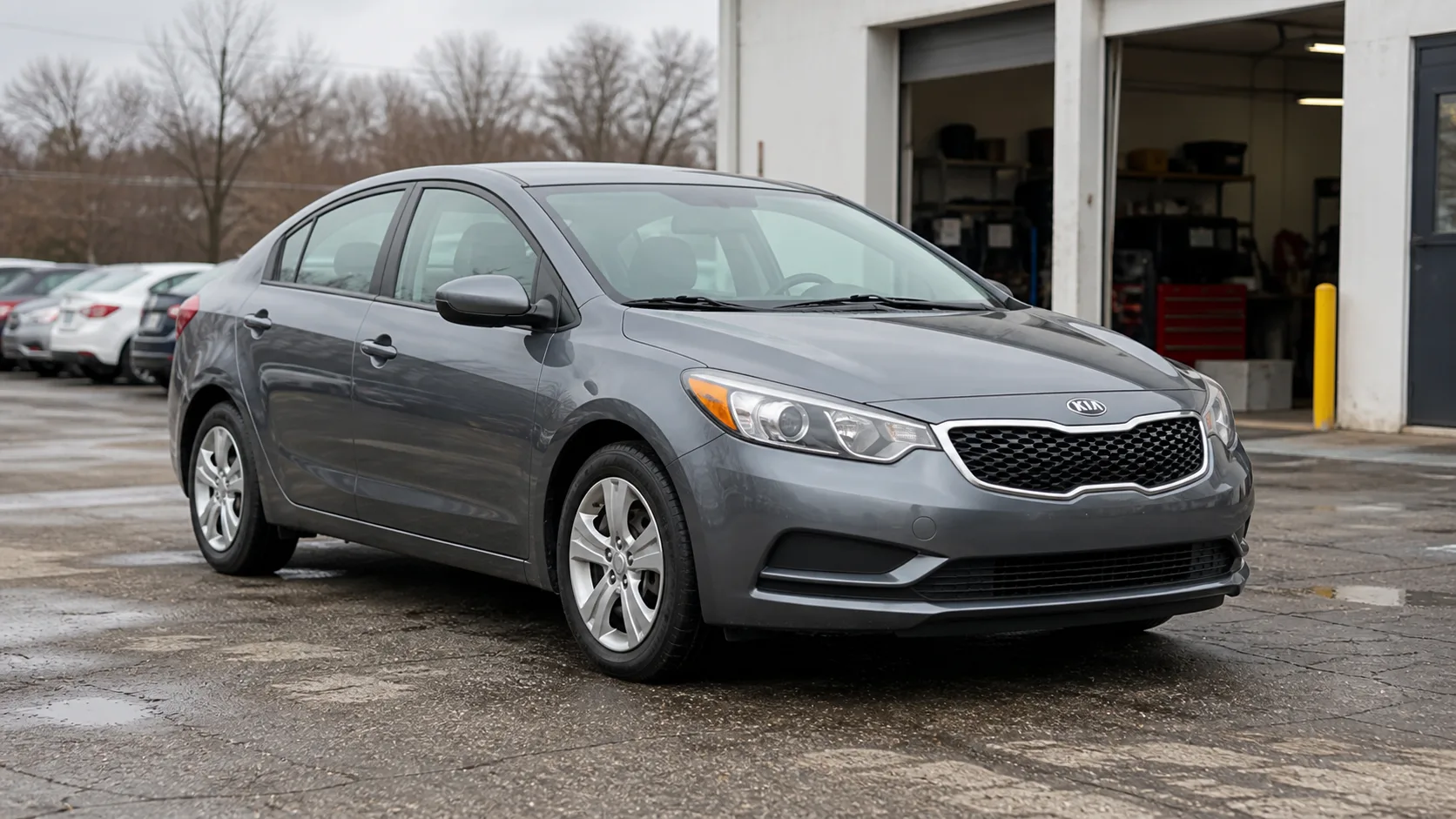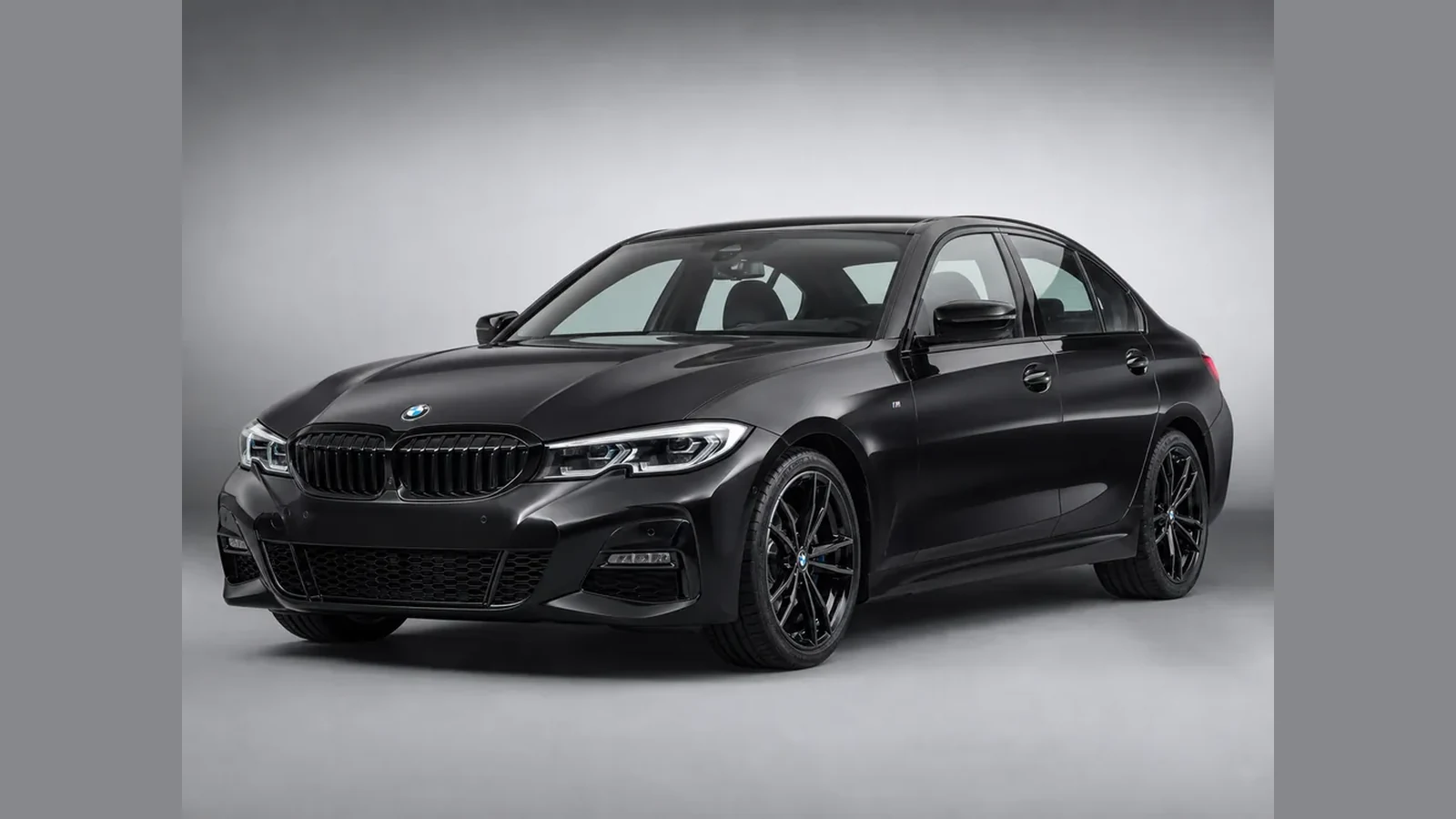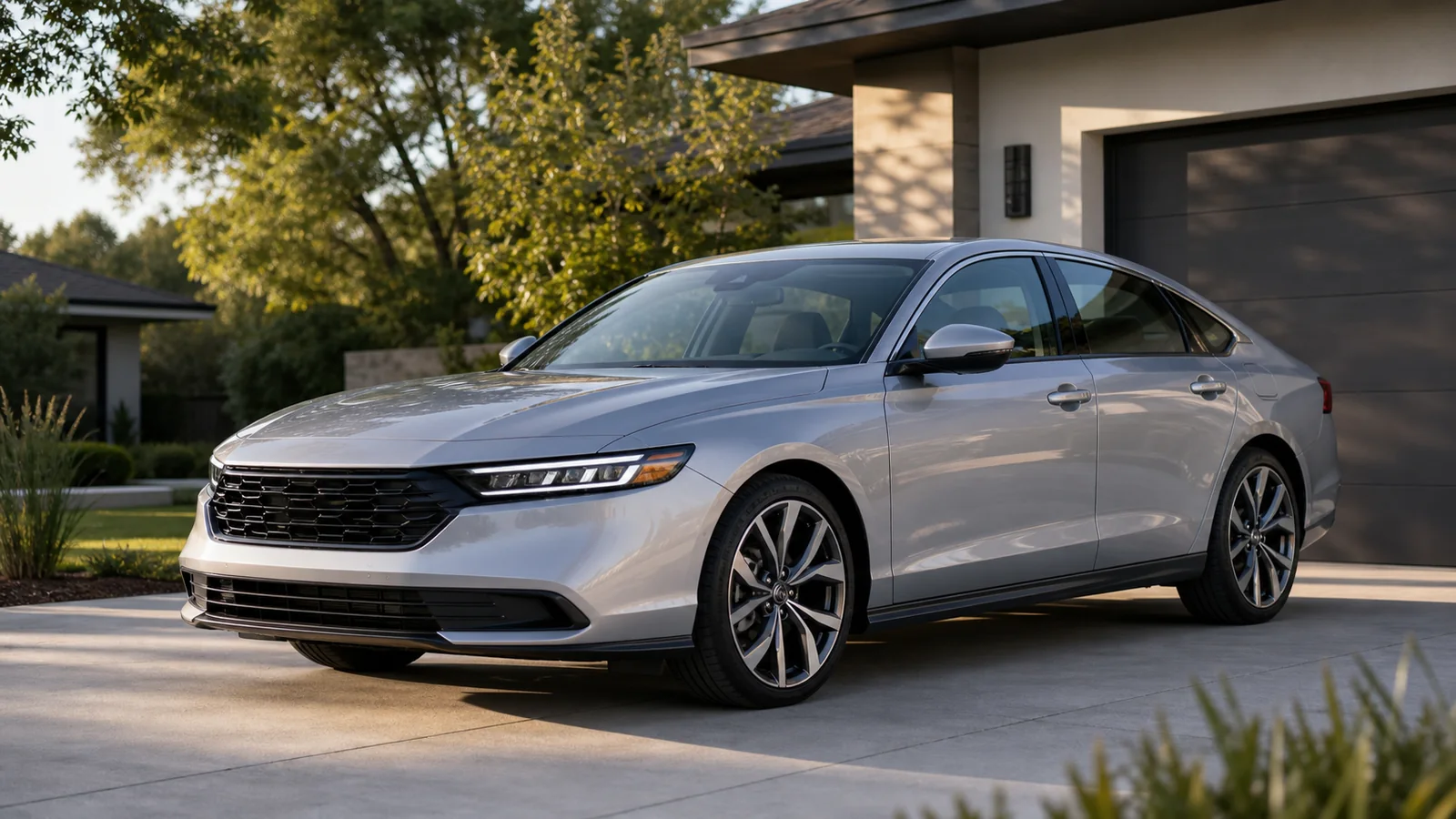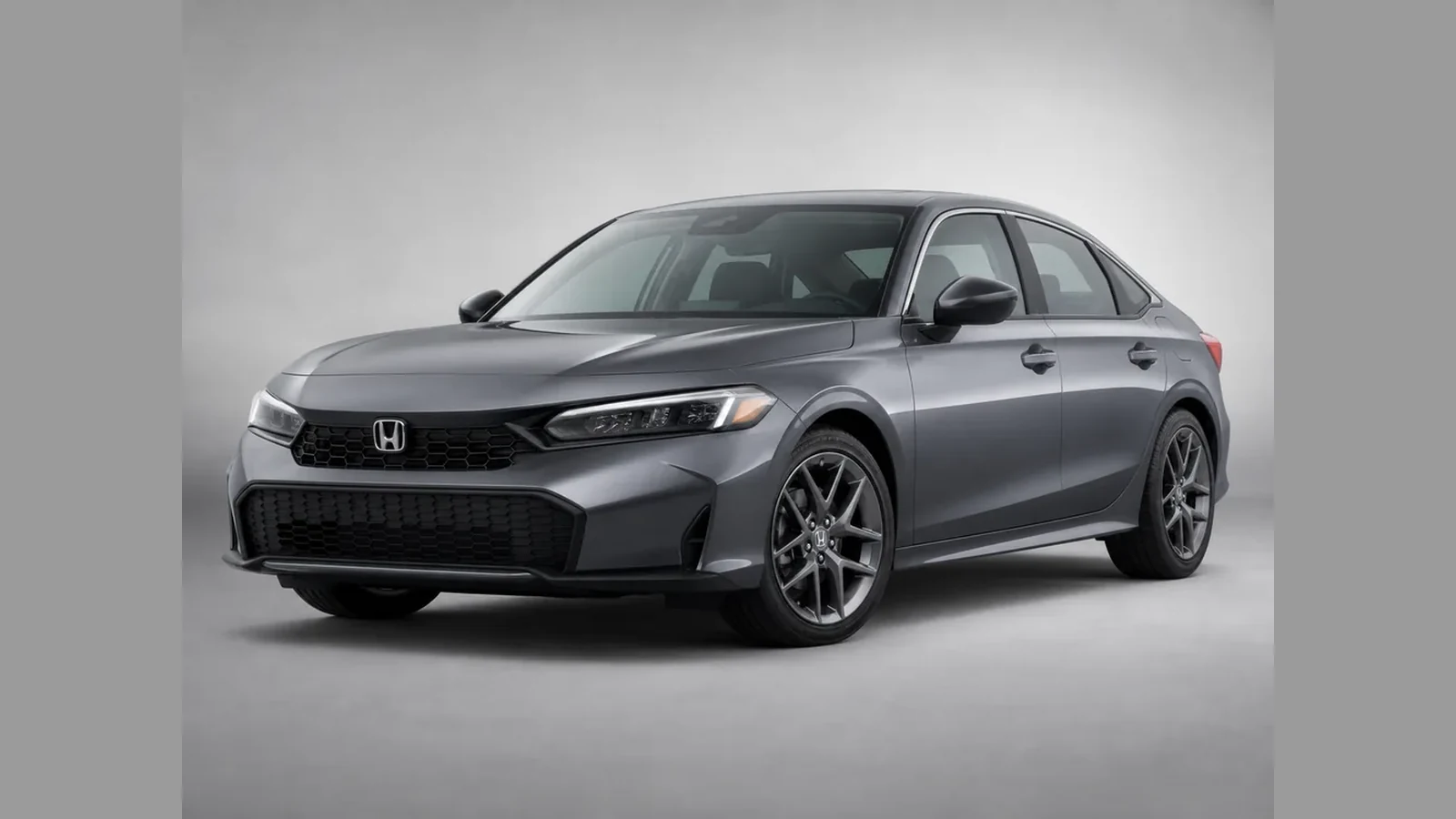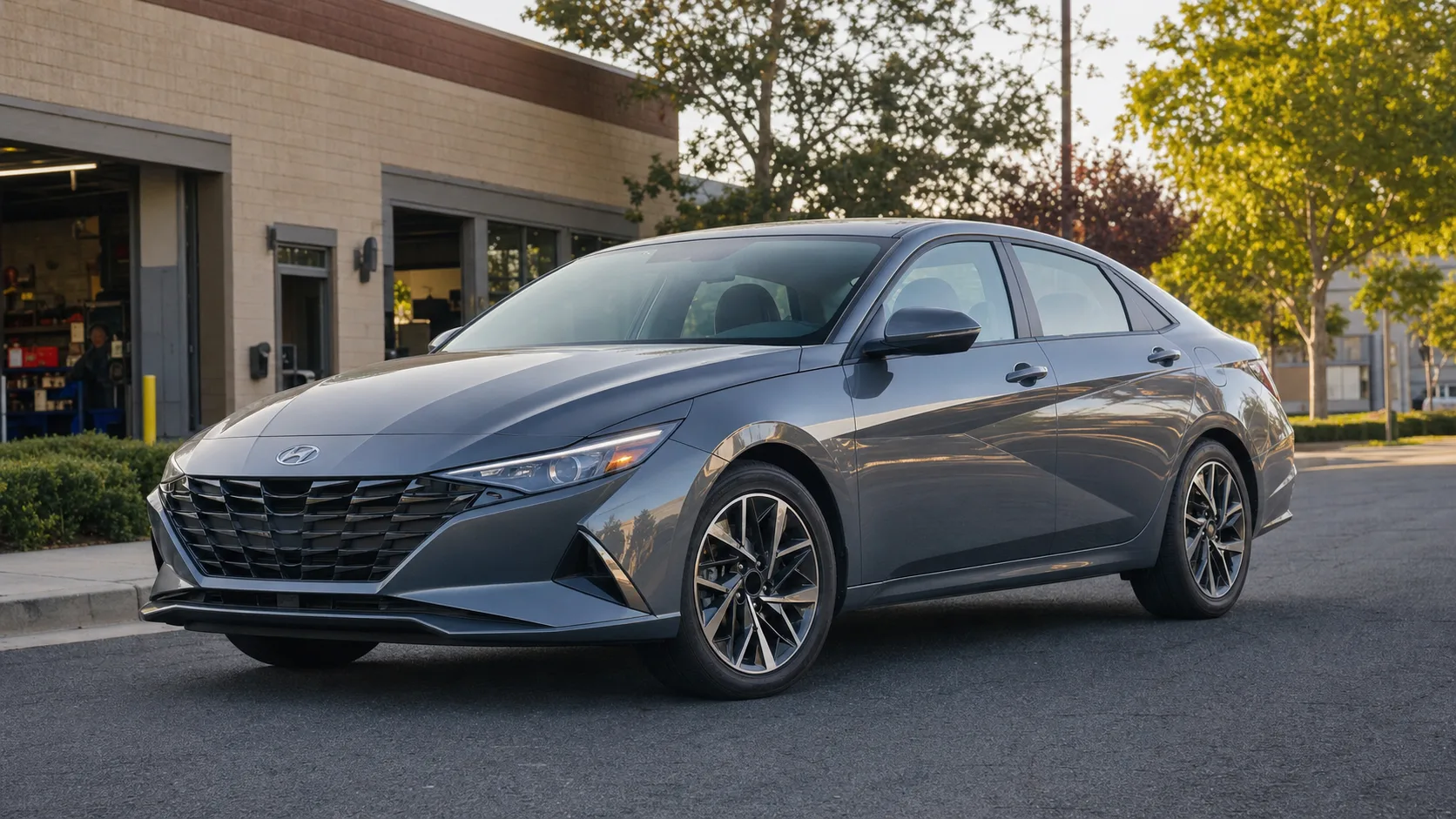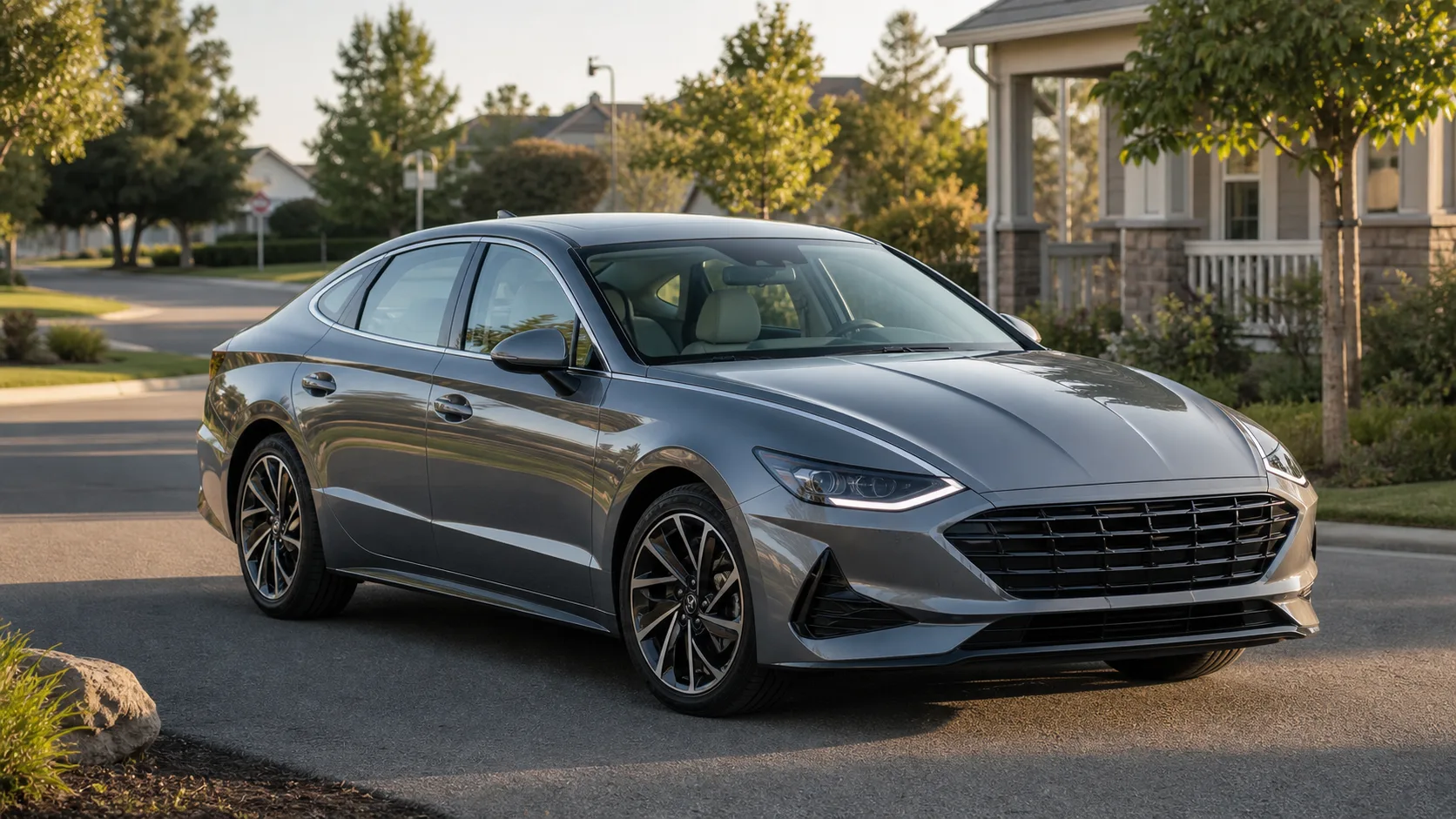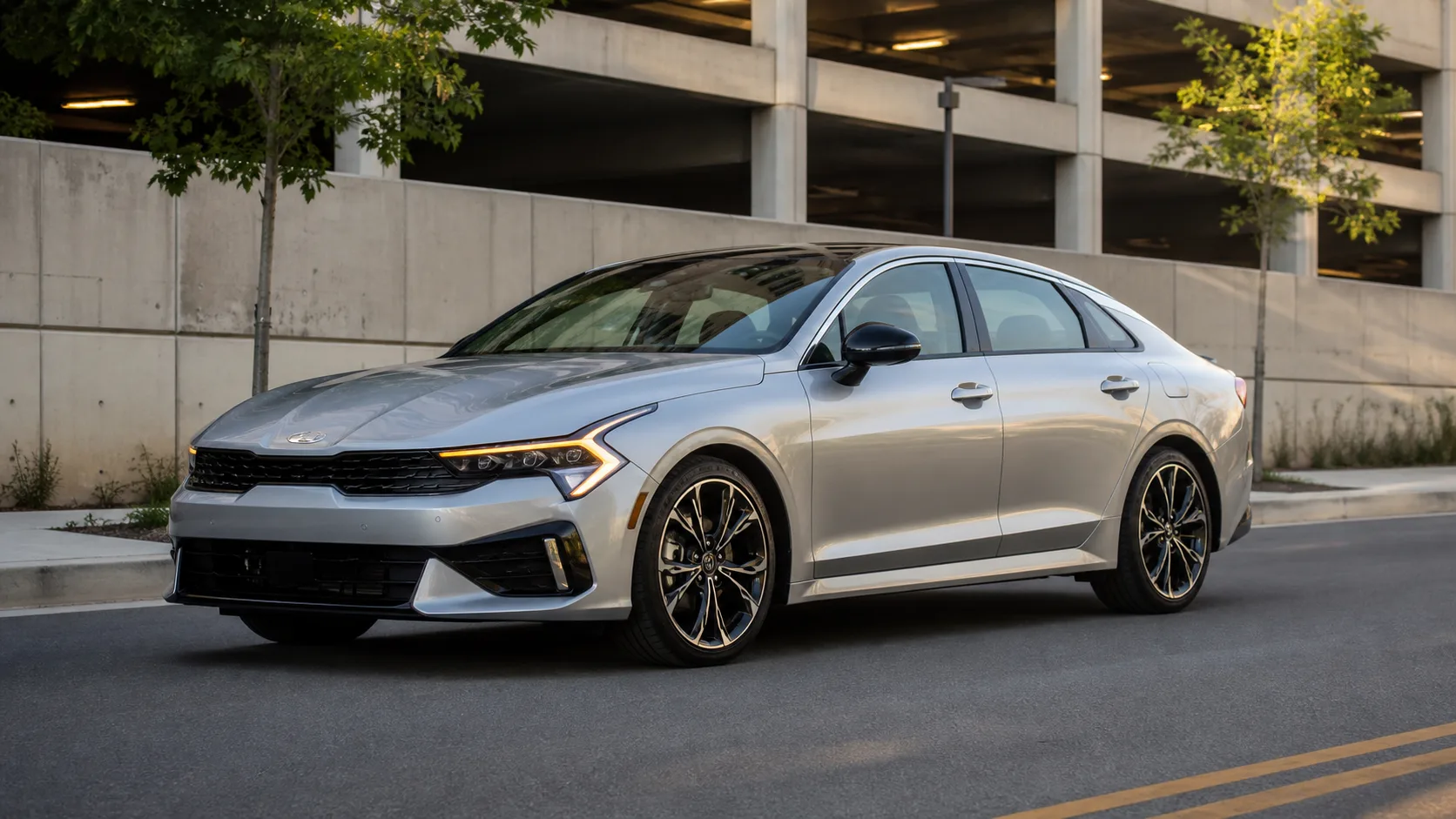
The midsize sedan that looks like it cost more
Most midsize shoppers land on a Camry or an Accord by default.
The Kia K5 exists for the buyer who walks past those two because they want a sedan with a sharper face and a lower price on a matching trim.
Styling is the first reason people choose it.
The K5 wears a coupe-like roofline and an aggressive front, and that look is a real reason to test it against the safe picks.
The car backs the look with a long warranty and a genuinely quick GT, so the personality runs deeper than the paint.
Prices run from about $27,190 to $34,490, which keeps a base K5 affordable and lets the GT climb toward sport-sedan money.
The honest catch sits under the hood. The K5 is gas-only in the U.S., so a driver chasing the lowest fuel bill is shopping the wrong car.
That single fact separates the K5 from its closest cousin.
The Hyundai Sonata shares much of the same engineering and adds a hybrid, while the K5 spends its energy on style and sport instead.
The K5 sits lower and lighter than the crossovers most of its buyers rejected, so it keeps cheaper tires and easier fuel numbers than a tall SUV.
It is a midsize sedan for someone who never wanted to climb up into one.
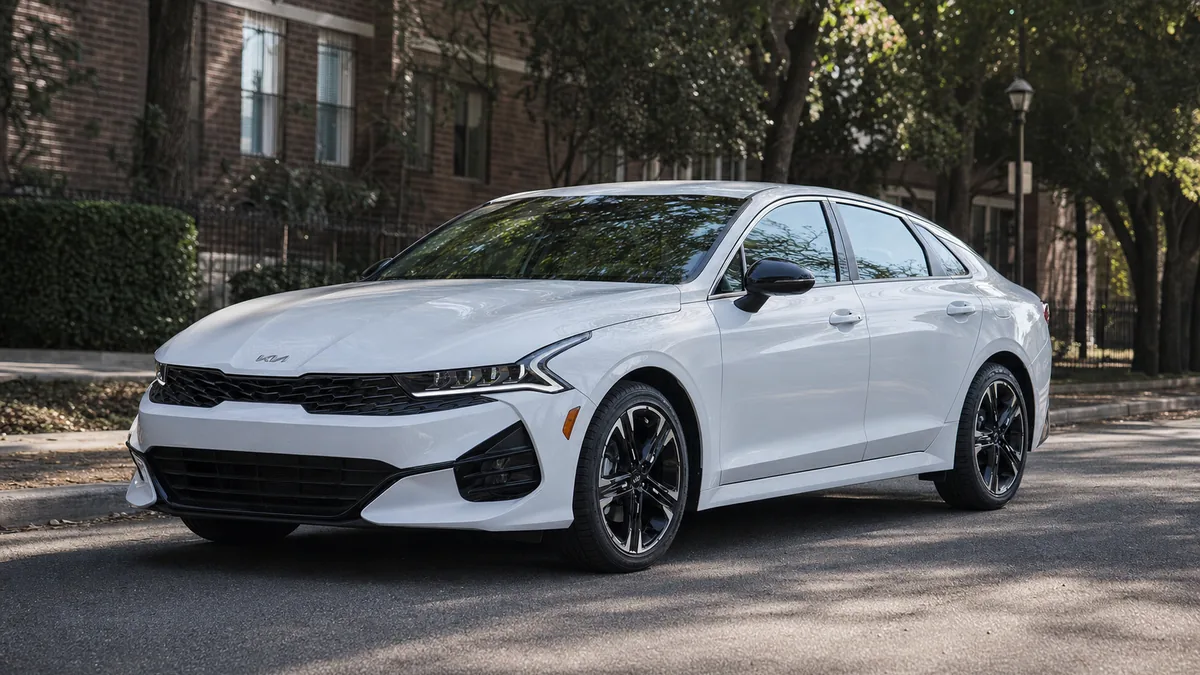
Sort yourself before you shop a trim.
- A daily commuter is fine in a normal 191 hp car
- A winter driver wants GT-Line AWD
- A speed-first buyer is the only one who needs the GT
Choose the K5 when a sharper look and a lower price move you more than the quietest, most efficient sedan on the lot.
The rest of this review sorts which K5 fits, and when a rival wins instead.
Traction or speed: the K5 makes you pick one
Here is the decision that trips up more K5 shoppers than any other.
Kia sells all-wheel drive on the GT-Line and sells 290 hp on the GT, and it never puts both in the same car.
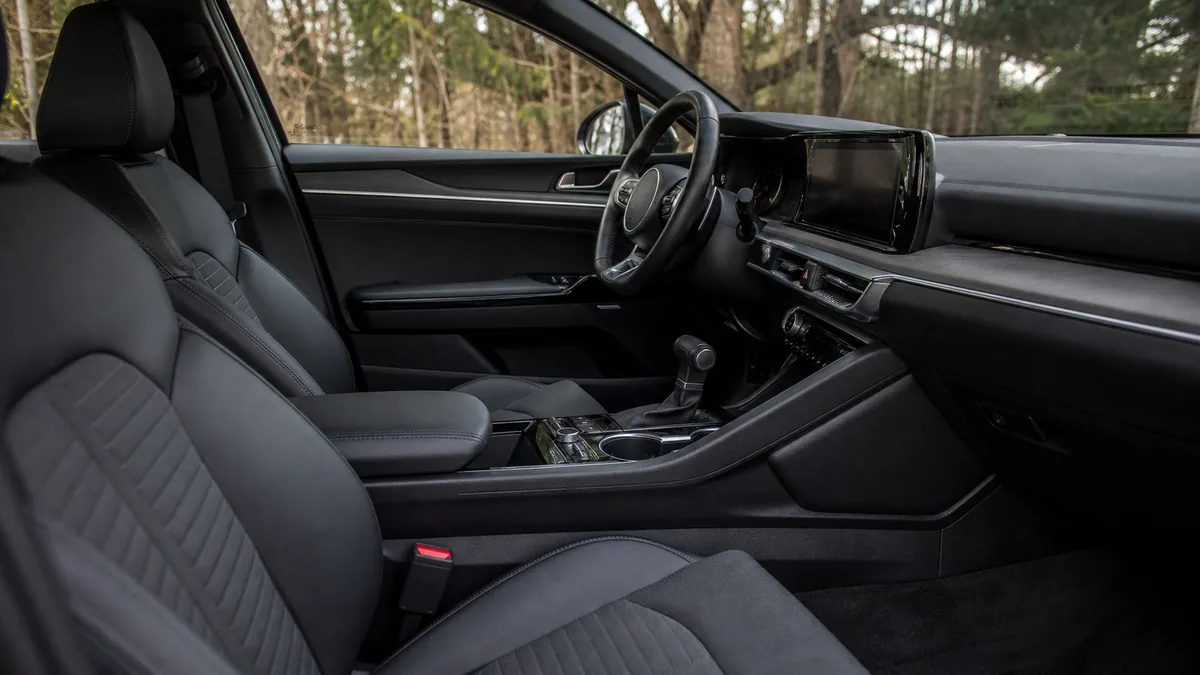
That means the weather pick and the fastest pick are different cars. If snow traction is the goal, GT-Line AWD is the answer.
If acceleration is the goal, the GT is the answer.
Most K5 trims run a 2. 5L four-cylinder rated at 191 hp and 181.5 lb ft, paired with an 8-speed automatic.
The GT swaps in a 2. 5L turbo with 290 hp and 311 lb ft through an 8-speed dual-clutch automatic.
Kia cites a 5.4-second 0 to 60 mph run for the GT, based on AMCI testing of the 2025 car.
The standard engine is adequate rather than exciting, so a buyer who expects the K5 to drive as hard as it looks should drive the GT and a normal trim back to back.
The current car launched for 2021 on Kia's DL3 platform and picked up a 2025 refresh that sharpened the front and updated the cabin.
A newer used K5 looks and feels more current inside, which is worth weighing against the lower price of an early car.
| Trim | Main reason to choose it | Watch for |
|---|---|---|
| LXS | Lower price and simple commuting | Fewer style features |
| GT-Line FWD | Best look for many buyers | Still 191 hp |
| GT-Line AWD | Extra traction for winter | Lower mpg and more tire attention |
| EX | Comfort and features | Less sporty than the styling suggests |
| GT | 290 hp performance | No AWD, higher tire and insurance cost |
The trap is wanting both traction and power, then learning the K5 will not sell them together.
Decide which one matters on your roads before the styling makes the choice for you.
The normal 191 hp trims are not slow, and they are not as quick as the body promises.
That is fine for a comfortable commuter and a letdown for anyone who expected a budget sport sedan.
Every trim stays a gas sedan, so the split is about traction and speed, never about fuel type.
If straight-line pace is the pull, cross-shop the GT against our fun to drive picks before you sign.
Name your priority, traction or speed, because the K5 forces a choice its Sonata cousin does not.
What the price and warranty actually buy
Value is the K5's second argument after the look.
On a matching trim it often lands below a comparable Toyota Camry or Honda Accord, which leaves room in the budget for tires, fuel, and insurance.
The warranty is the headline number.
Kia's coverage is a real part of the value, and it follows the exact car and its owner history, so a used seller waving a long warranty means nothing until you confirm it by VIN.
Pros
- Sharp styling that reads more expensive than the price
- Strong warranty value when verified by VIN
- Available AWD on GT-Line
- Genuinely quick 290 hp GT
- Good feature content for the money
Cons
- No hybrid option in the U.S.
- The GT cannot be had with AWD
- Resale trails the Camry over the same years
- Sport trims raise tire and insurance cost
Equipment is where the K5 quietly wins. Big screens, driver-assist tech, and a well-finished cabin show up at prices where the default badges can ask for more.
A loaded K5 still has to stay honest about its ceiling.
The pricier it climbs toward mainstream sedan money, the harder it fights a well-equipped Camry Hybrid or Accord Hybrid that answers with lower fuel bills.
Resale is the trade you accept for the lower sticker.
Toyota and Honda usually hold value better, so a cheaper K5 can cost about the same to own if you sell after a few years.
Kia's wider value story sits in the Kia brand hub, and the K5 carries a sharper, sportier version of it.
Buy the K5 for styling, features, and price, not for the strongest resale on the block.
The hybrid you cannot buy, and the fuel math that follows
The K5's biggest limit is a missing option.
There is no hybrid K5 in the U.S., so the fuel savings that define the class leaders are simply off the menu here.
Fuel economy is respectable for a gas midsize, at up to 26 city and 37 highway, and the GT still returns a Kia-estimated 33 mpg on the highway.
Respectable still trails a hybrid, and a high-mile commuter feels that gap every month.
Fuel reality
- Best K5 economy
- up to 26 city / 37 hwy
- Hybrid option
- none in the U.S.
- Best fit
- low to average annual miles
- Wrong fit
- high-mile commuters chasing mpg
- Cheaper rival math
- hybrid Camry, Accord, or Sonata
The decision here is honest and simple. If your yearly mileage is low, the K5's lower price can offset the fuel penalty and the styling wins.
If you drive a long commute, a hybrid rival can pay back its price premium and then keep saving.
A rough example makes it real.
A driver covering 18,000 miles a year at a wide mpg gap can hand back a four-figure fuel difference over a few years, so the K5's lower purchase price has to beat that number to come out ahead.
The cousin comparison makes the point.
A Hyundai Sonata Hybrid reaches into the mid-50s on the highway, and a Camry now comes only as a hybrid, so both answer a question the K5 refuses to.
Run the numbers before styling decides for you.
Multiply your annual miles by the fuel-price gap, and see whether the K5's lower purchase price still comes out ahead over the years you plan to keep it.
A K5 that looks aggressive is still a normal commuter underneath, and that is fine as long as you are not paying a fuel penalty you could have skipped.
Pick the K5 with your eyes open about fuel, because this is the one place a plainer hybrid clearly beats it.
Buying a used K5 without inheriting someone's hard launches
A used K5's risk depends far more on trim than on the model year. A normal 2.
5L car with clean records is a simple bet, and a GT that has been driven hard is a different animal.
Start with the warranty, because it is the K5's biggest used-car lever.
The first owner and a later owner may not carry identical powertrain coverage, so confirm what remains with Kia by VIN before you pay extra for it.
The standard 8-speed automatic should shift cleanly.
The GT's dual-clutch automatic needs a test in slow traffic, at quick starts, and on a highway pass, because roughness, delayed engagement, or a warning light should stop the sale until a mechanic looks.
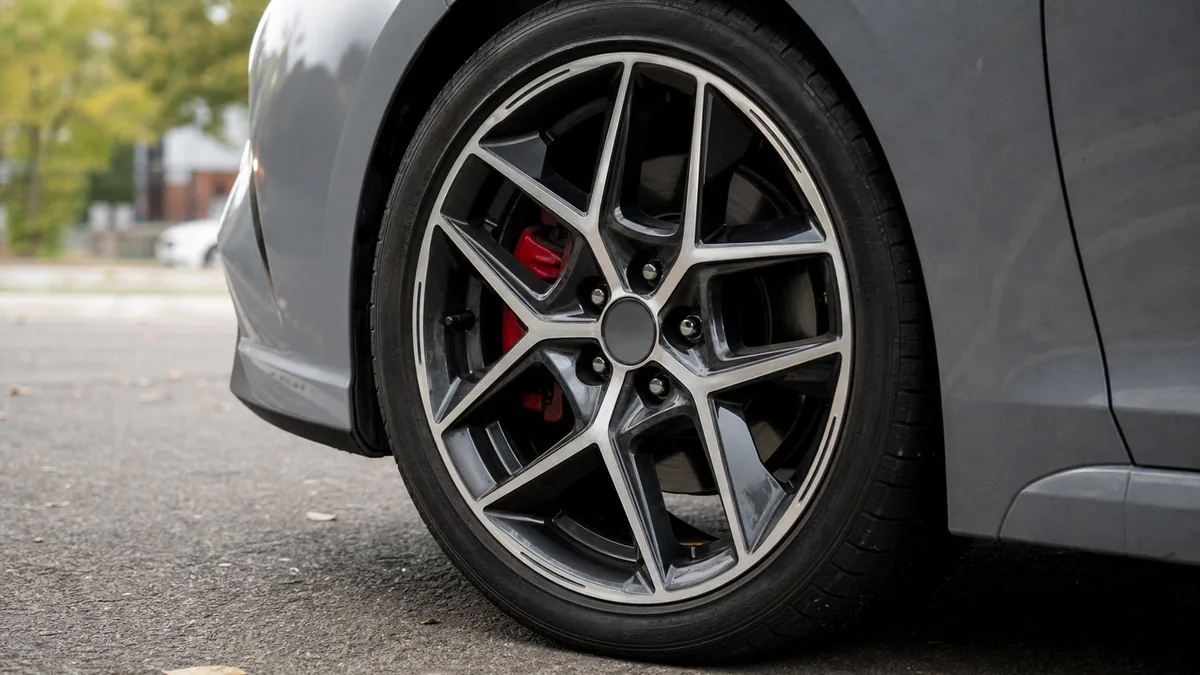
AWD trims add one more check. Matching tires matter more on an all-wheel-drive car, so confirm the same brand and tread depth across all four corners before you negotiate.
Ride quality tracks the wheels and trim.
The K5 can feel firmer than a comfort-first Sonata or Camry, especially on larger wheels, so drive rough pavement before you commit rather than trust a smooth showroom lot.
Run the same short list on any K5 you look at.
- Quote insurance on the exact trim, not a base car
- Test the GT dual-clutch in stop-and-go traffic
- Check GT-Line AWD tires for matching brand and tread
- Scan for stored codes and test every screen and camera
- Verify recall and warranty status by VIN
Weigh new against used with real numbers, which our new or used guide lines up against the fuel and warranty picture.
Simple upkeep protects the rest, starting with on-time oil changes and a service record you never have to explain.
Against a proven Camry reliability record, the K5 leans on its warranty to carry the same confidence, so verify that coverage rather than trust the badge.
A stock, well-kept normal trim with remaining warranty is the safest used K5, and a used GT is only a deal after a performance-car inspection.
What a K5 really costs once tires and insurance show up
The K5's cost story is strongest in normal trims and weakest in the GT.
A GT-Line or EX gives you midsize space, the long warranty, and the sharp look at a price that stays friendly, while the GT adds bills that many buyers never planned for.
| Cost area | What changes the bill | Buyer move |
|---|---|---|
| Fuel | No hybrid option | Compare annual fuel cost with hybrid rivals |
| Warranty | New coverage is a major value | Verify transfer terms on used cars |
| Tires | GT and larger wheels cost more | Price replacements before trim choice |
| Insurance | GT can raise premiums | Quote the VIN before deposit |
| Resale | Toyota and Honda usually stronger | Buy at a fair discount |
Insurance is the hidden test on the sporty trims.
Quote the GT and GT-Line AWD before you leave a deposit, because a high premium can erase the value that pulled you toward the Kia.
AWD carries its own cost logic.
It helps traction, and it adds parts and makes tire matching more important, so front-wheel drive is often the cleaner bill when winters are mild.
The zero on hybrid savings is honest, and so is the strong score on style and warranty.
Those numbers are the K5 in one glance, a stylish, well-covered gas sedan that does not pretend to save fuel.
The GT should be budgeted like a performance trim from day one.
That means pricing tires and brakes and accepting that enthusiastic driving shortens their life, so the extra power earns its keep only when the owner pays for the parts that support it.
A loaded K5 is also worth setting beside a used BMW 3 Series if driving feel is why you are stretching, which keeps the payment honest.
A normal K5 stays cheap to live with when you keep it stock and serviced.
Rotate the tires, fix alignment early, and skip cosmetic add-ons that do not help resale, because the value case is strongest when the car still looks clean and unmodified several years later.
A simple habit keeps the cheaper trims cheap, and our tire-pressure check matters most on larger wheels where tire wear becomes the loudest cost.
If you are financing, avoid stretching a long loan to make the GT feel affordable, and our lease or buy guide sizes that call.
The cheapest K5 to own is a well-priced GT-Line or EX kept stock, serviced, and clear of GT running costs.
The K5 to buy, and the buyer who should walk away
The K5 is a good midsize sedan when you accept exactly what it is, a stylish gas car with warranty value, AWD on the right trim, and a quick GT.
It is not a fuel saver, and it does not chase Toyota resale.
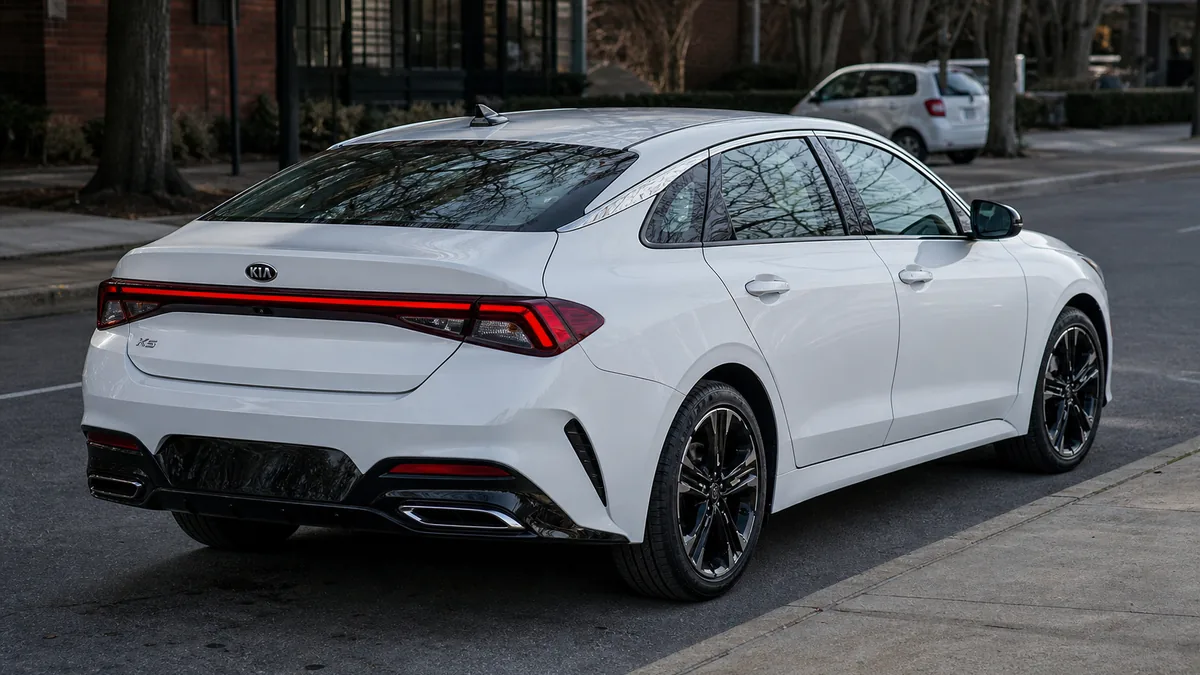
The GT-Line is the sweet spot for most buyers because it keeps the look and the value without the GT's full running-cost jump.
Add AWD when your winters justify it, and stay front-wheel drive when roads are mild and fuel cost matters.
The GT earns its place only for a driver who will feel the 290 hp every week.
If most of your driving is traffic, school pickup, or a calm commute, the GT tends to raise costs more than it improves the day, so test both versions on the same roads first.
Before you sign, run the four checks that decide whether the K5 still wins.
- Compare Sonata, Camry, and Accord fuel costs
- Quote insurance on the exact trim
- Verify the warranty by VIN
- Inspect the tires on all four corners
Name the real need before the trim.
A buyer who secretly needs cargo height should load real bags and sit behind their own seat first, then check our best family SUVs before forcing the K5 to do crossover work.
A shopper stepping up from a compact should test the K5 against a Kia Forte or Hyundai Elantra and make the larger car justify its higher fuel, tire, and insurance cost.
A stylish sedan still has to work on Monday morning.