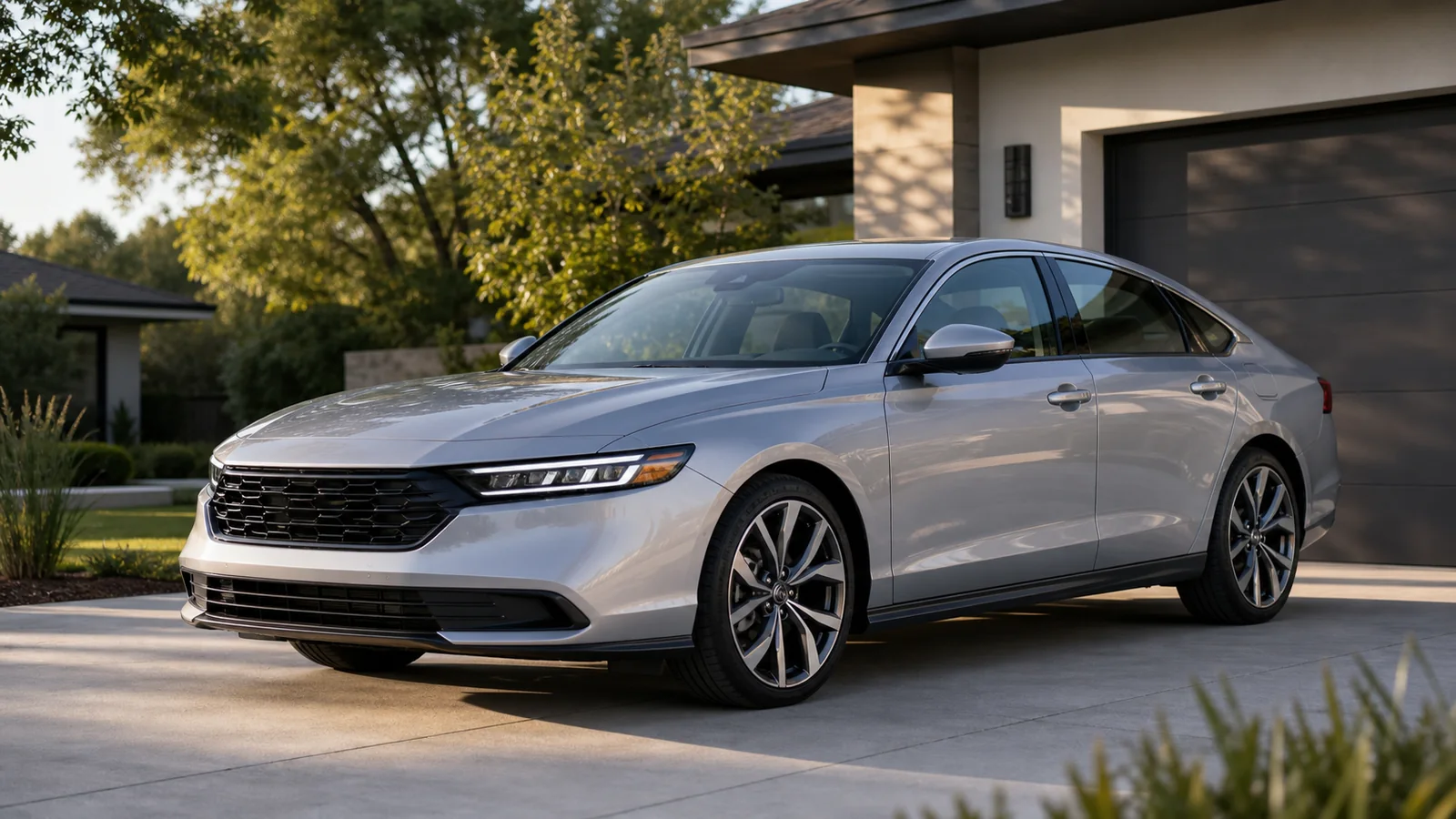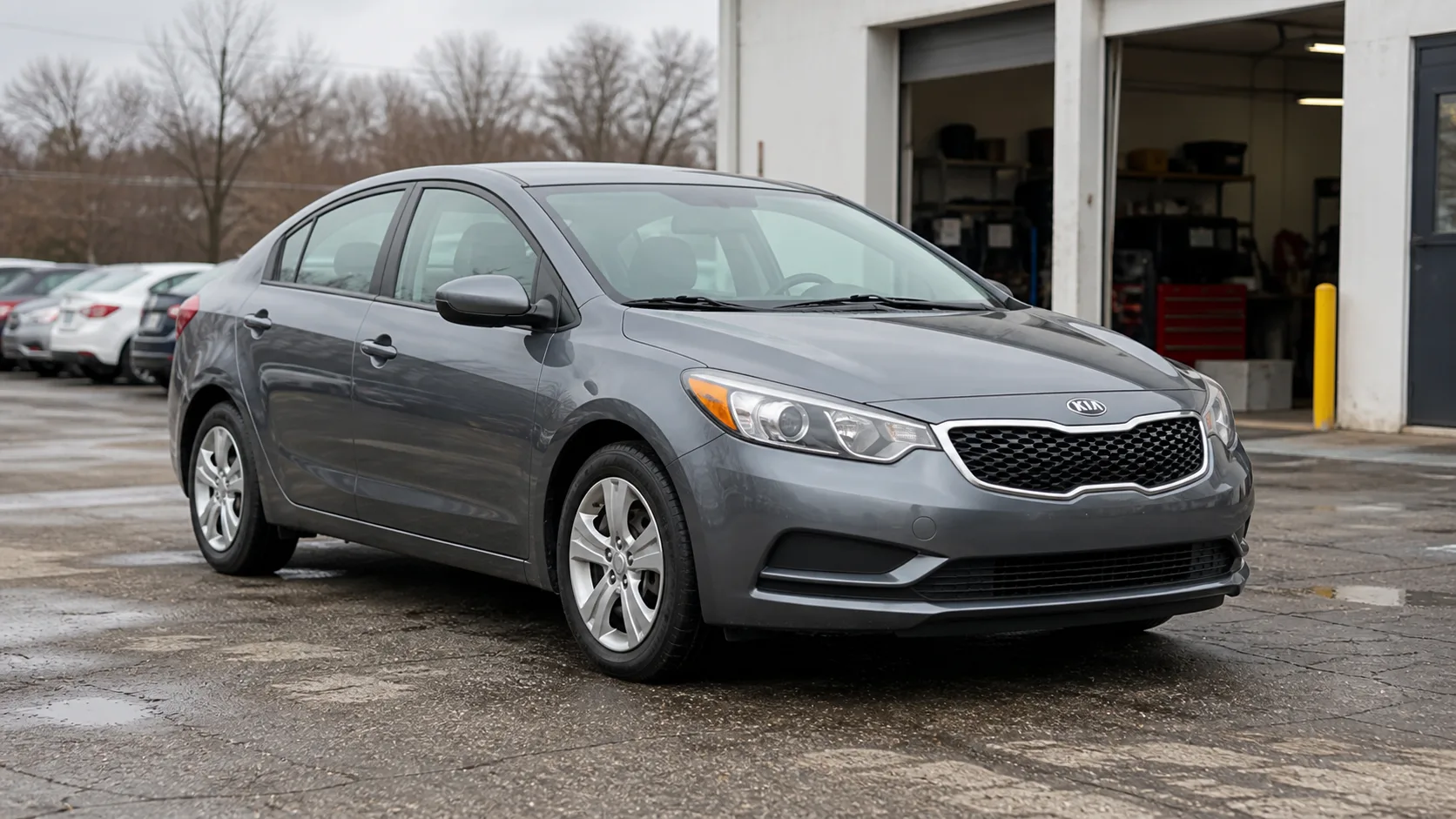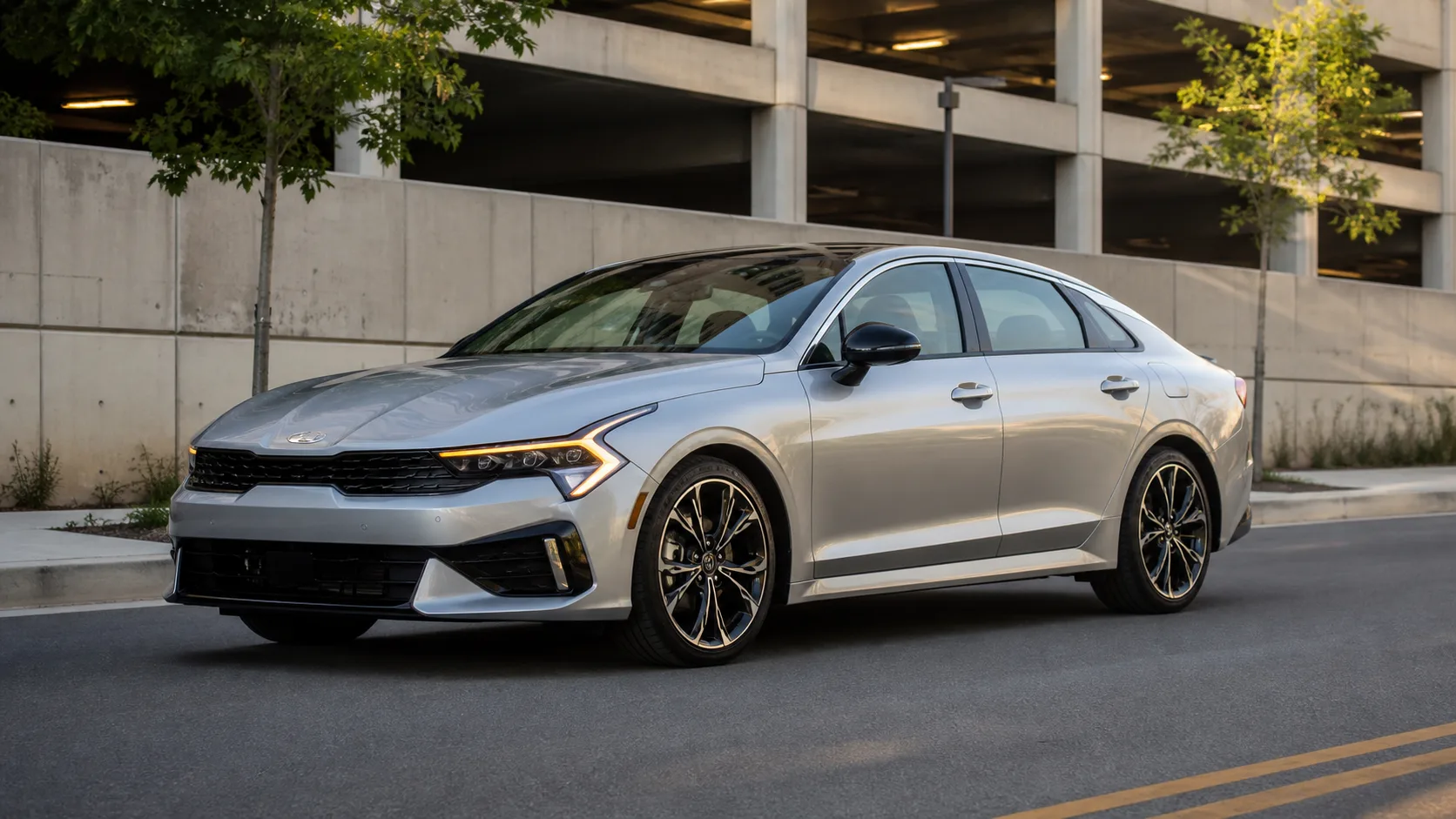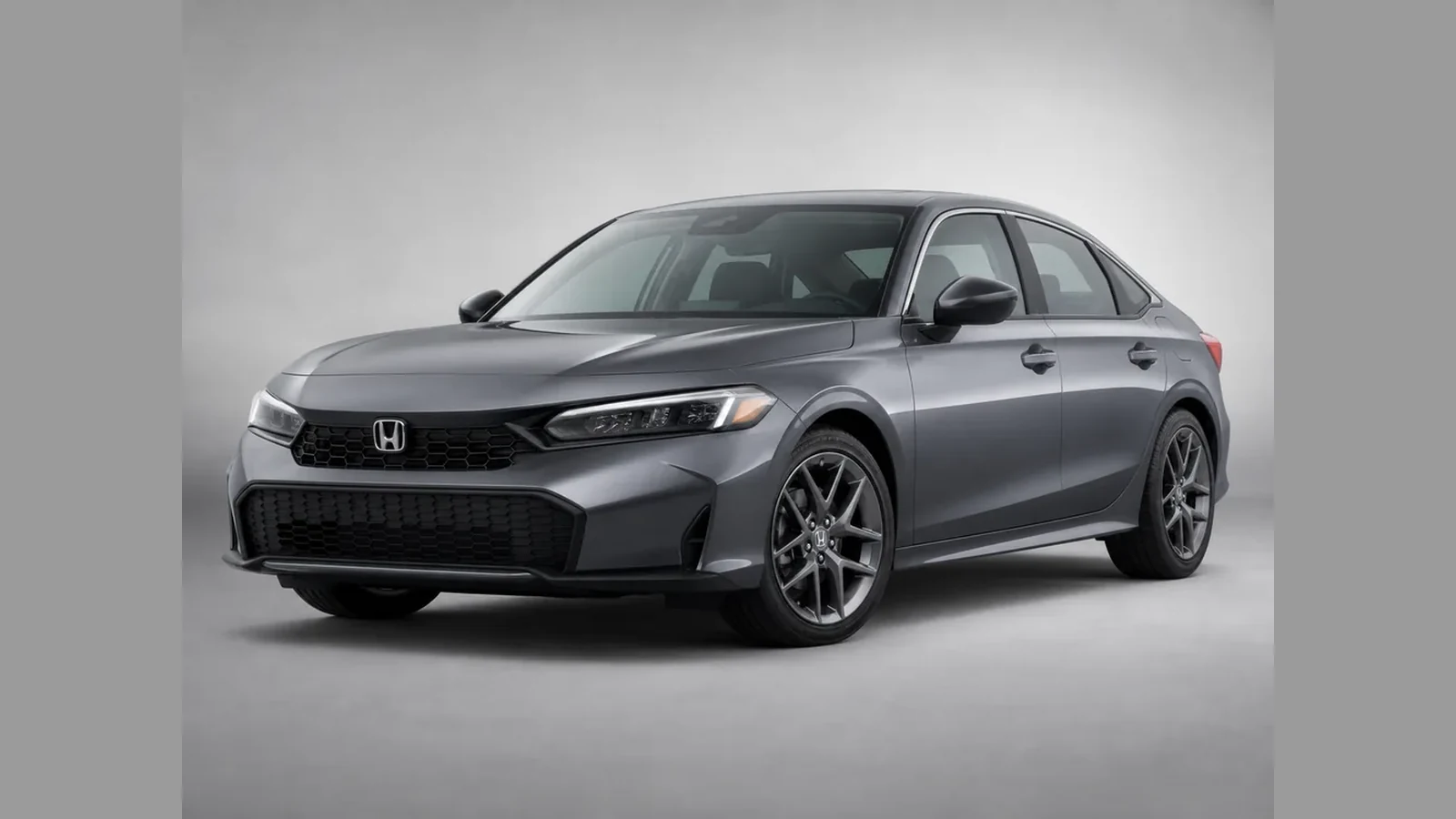
Is a Civic the right first car, or a size-down from an SUV
Start with the question that actually stops most Civic shoppers. Do you need a small sedan, or are you about to overbuy an SUV you will barely fill?
For a lot of first-time buyers and daily commuters, the Civic answers that before you open a single brochure.
The Civic has one job a Camry or a crossover does not.
It has to stay small enough to park on a tight street, cheap enough for a first insurance policy, and still useful enough that you never feel punished for skipping the SUV.
The current sedan clears that bar with a real back seat and a 14.8 cubic foot trunk.
That trunk matters more than the number suggests. It swallows luggage, a week of groceries, and a folded stroller, so a small family can live with the sedan shape for years.
You give up SUV cargo height, not everyday usefulness.
The Civic sits in the compact sedan class, and it parks easily, sips fuel, and resells fast when your life changes.
That everyday practicality is why it anchors our best first cars list.
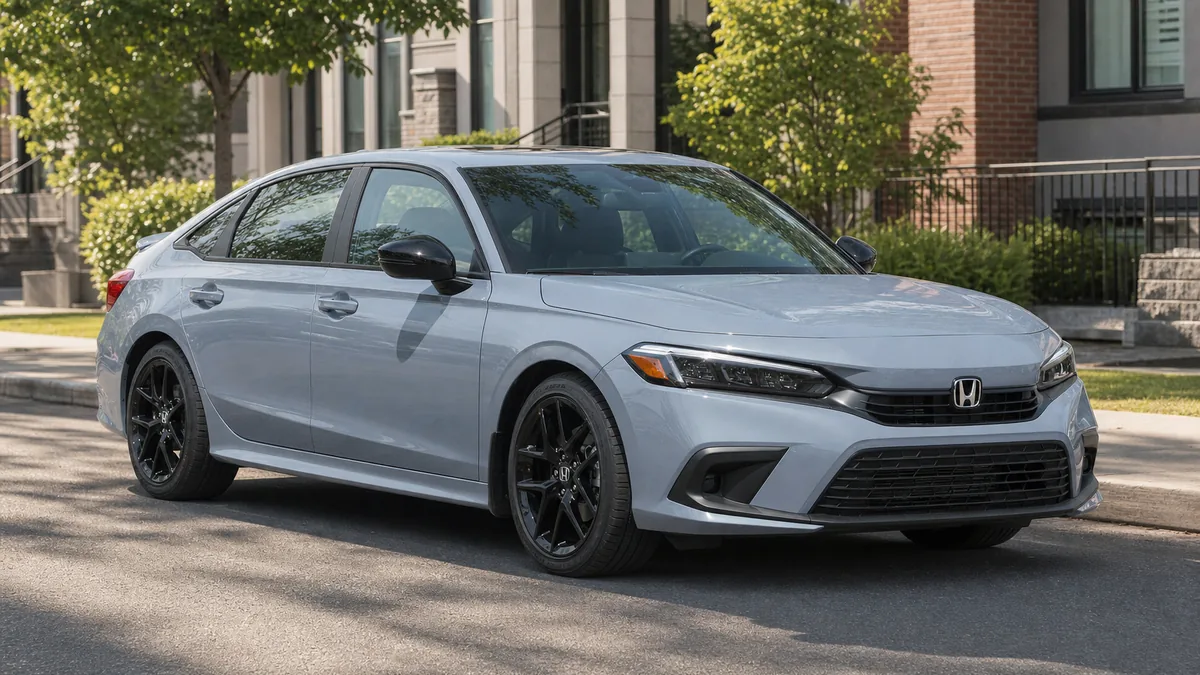
Many shoppers jump straight to a Honda CR-V because they assume a compact sedan cannot handle real life. That step costs more at purchase, at the pump, and at tire-replacement time.
If you carry passengers more often than bulky cargo, the Civic makes the SUV feel optional.
The Civic also keeps real steering feel, which is rare in a class where cars get bought only because they are cheap.
It stays sensible without feeling numb, so it works for a nervous new driver and still satisfies an adult who could spend more.
Here is the honest filter. If your week is passengers, parking, and a normal trunk, the Civic fits.
If it is car seats three-across or gravel roads in winter, an SUV is the smarter buy.
Which Civic trim fits, from LX to Type R
The Civic lineup splits into two buyer paths before you ever argue about trim names. The gas 2.
0L engine makes 150 hp through a CVT and keeps the price down. The hybrid pairs a 2.
0L gas engine with electric motors for 200 total system hp and feels stronger in normal traffic.
Match the trim to the job, not to the badge. The gas LX and Sport work when you need the lowest payment and can accept slower passing power.
The electric motor on the hybrid fills in low-speed torque, so it pulls away from a light with more confidence.
A quick way to sort the choices before you shop.
- LX gas is the lowest-price commuter, with the slowest passing power
- Sport gas adds looks over the LX, though its wheels and tires cost more to replace
- Sport Hybrid gives the best mix of mpg and response for most buyers
- Sport Touring Hybrid loads on comfort and tech, but the payment can approach a larger sedan
- Si and Type R are driver-focused, with tire and insurance bills to match
| Choice | Best use | Watch for |
|---|---|---|
| Gas LX | Lowest-price commuter | Slower passing power |
| Gas Sport | Simple Civic with better looks | Wheels and tires cost more than LX |
| Sport Hybrid | Best mix of mpg and response | Higher price than gas trims |
| Sport Touring Hybrid | Comfort and tech Civic | Payment nears a larger sedan |
| Si or Type R | Driver-focused Civic | Insurance and tire cost jump |
The Si and Type R are enthusiast branches, not the default Civic.
The Si is the affordable enthusiast pick, and the Type R is a track-capable hot hatch at a much higher price, so they land on our fun to drive shortlist rather than a commuter budget.
If a gas car and a hybrid Civic sit on the same lot, drive them back to back.
The hybrid's extra torque is obvious at low speed, and that feel is the real reason to pay more, not just the mpg number.
Most first-time buyers land on a gas trim or a Sport Hybrid and stop there.
The pricier a Civic gets, the more it fights roomier cars at the mainstream price level, and the harder that trim is to justify.
Real Civic fuel economy, gas versus hybrid
Fuel economy is the number most Civic shoppers search for, and it rides on how you drive more than on the window sticker.
The Civic Hybrid is rated at 50 mpg city, 47 highway, and 49 combined, which is the strongest case for spending more up front.
The hybrid figure helps city drivers most.
In stop-and-go traffic the system recovers energy under braking and leans on electric assist, so the savings pile up in exactly the driving that makes small engines work hard.
On steady highway miles the gap narrows.
If your week is mostly open road, the cheaper gas car uses nearly as little fuel, and the money you saved at purchase stays in your pocket.
Match the powertrain to your week before you sign.
- Mostly city and traffic, take the hybrid for the 50 mpg city rating
- Mostly highway, the gas car saves you money up front for similar real mpg
- Mixed driving, drive both and let low-speed response break the tie
Older Civics tell a different mpg story worth knowing if you shop used. The 1.
5L turbo LX and EX trims from the previous generation reach about 39 mpg highway, strong for their time but short of what the current hybrid returns.
So the fuel decision is really a commute decision. Count your traffic days against your highway days, then choose the powertrain that matches the map you actually drive.
How reliable is the Civic, and which used one to trust
The Civic carries a strong long-term record and rates above average for a compact car. Engine choice still shapes the risk.
The current 2. 0L gas engine is simple by modern standards, and the hybrid sidesteps the older 1.
5L turbo oil-dilution worry that trailed some earlier cars.
A clean name on the badge does not make every used Civic equal.
A stock 11th-generation sedan with service history is a far safer bet than a modified turbo car on cheap tires with skipped oil changes.
- 2016 to 202110th-generation Civic brings turbo popularity, strong space, and some 1.5L oil-dilution concern
- 2022 to 202411th-generation Civic matures the cabin and keeps the simple 2.0L gas engine
- 2025 to presentCivic Hybrid returns as the stronger fuel-saving daily driver
Hybrid shoppers and Si shoppers should ask different questions. On the hybrid, look for smooth operation, clean service records, and even tire wear.
On the Si, clutch feel, brake wear, tire quality, and modification history move to the front.
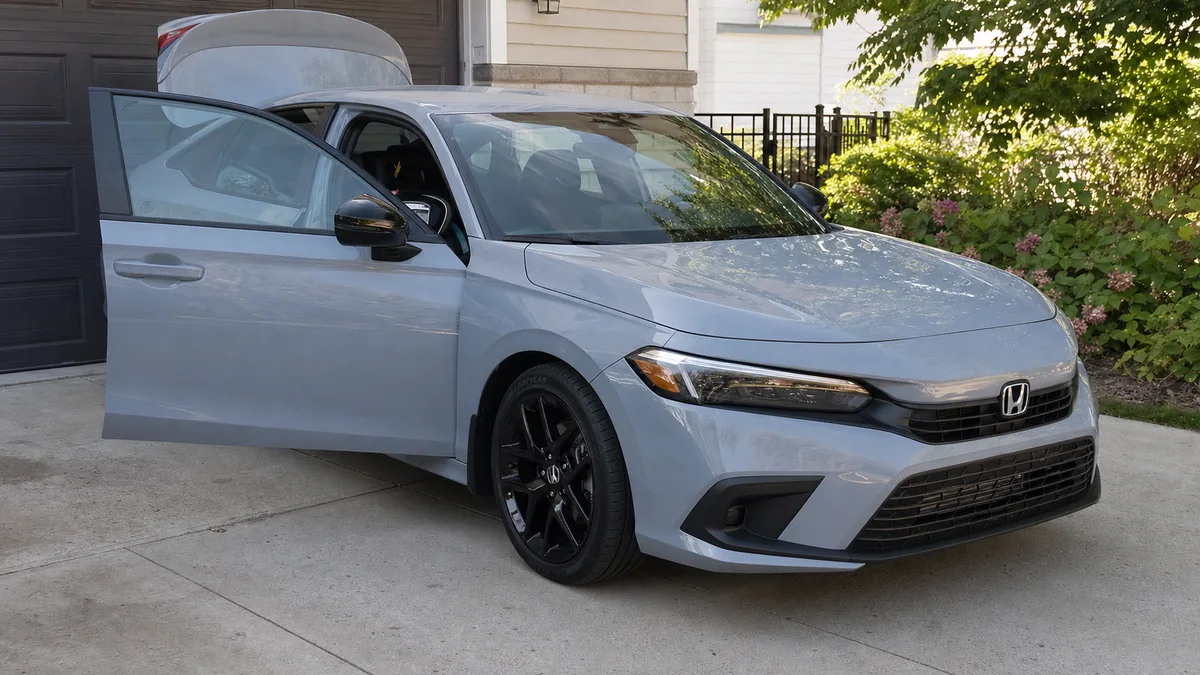
The boring used path is the safe one. Choose a stock car, confirm the service intervals, keep up with simple oil changes, and do not overpay for aftermarket parts.
A Civic with a loud exhaust and an unknown tune should be priced like a risk, not a prize.
If you want the deeper failure history before you commit, our Civic reliability breakdown covers the known trouble spots by generation and engine.
What to check on a used Civic before you buy
The Civic's weak spots show up as comfort, age, and previous-owner history more than one current mechanical flaw. That turns the test drive from a spec scan into a real inspection.
Run the same short checklist on every car you look at.
- Expect more road noise than a Camry or Accord, and test it on coarse pavement
- Pair your phone and check the screen, backup camera, and lane warnings
- On older 1.5L turbo cars, ask for oil-dilution history and service updates
- On Si or Type R models, look for tire wear, clutch abuse, and cheap modifications
Road noise is the complaint to expect rather than fear.
Good tires soften it, but they will not turn a Civic into an Accord, so drive a long stretch before you decide if it bothers you.
Small electronics deserve a real test too.
A dead phone pairing or a glitchy camera will not strand you, but they turn into daily irritation fast, and they can hint at past electrical repairs.

Two quick habits protect you on any Civic. Check the tire pressure and tread before you drive.
Make sure the car can jump start cleanly if the battery is older.
A city Civic may show curb rash and bumper repairs first, while an enthusiast car may show better care but harder driving, and the seller needs to explain either one before the price makes sense.
What a Civic really costs to own
The Civic keeps ownership cheap by stacking small wins. It runs on regular gas, wears normal compact-car tire sizes on most trims, has deep parts supply, and holds strong resale value.
The hybrid moves the fuel bill most in city driving.
A stop-and-go commute lets the mpg gain chip away at the higher purchase price, while a highway commuter often saves more with the cheaper gas trim.
Insurance is where the cheap-Civic assumption breaks. Performance trims cost noticeably more to cover, so quote the exact VIN before you assume every Civic is cheap to insure.
The first cost trap is buying the wrong trim for the job.
A Sport Touring Hybrid can drift close to a larger sedan's payment, and a used Si can look affordable until tires, insurance, and clutch wear join the math.
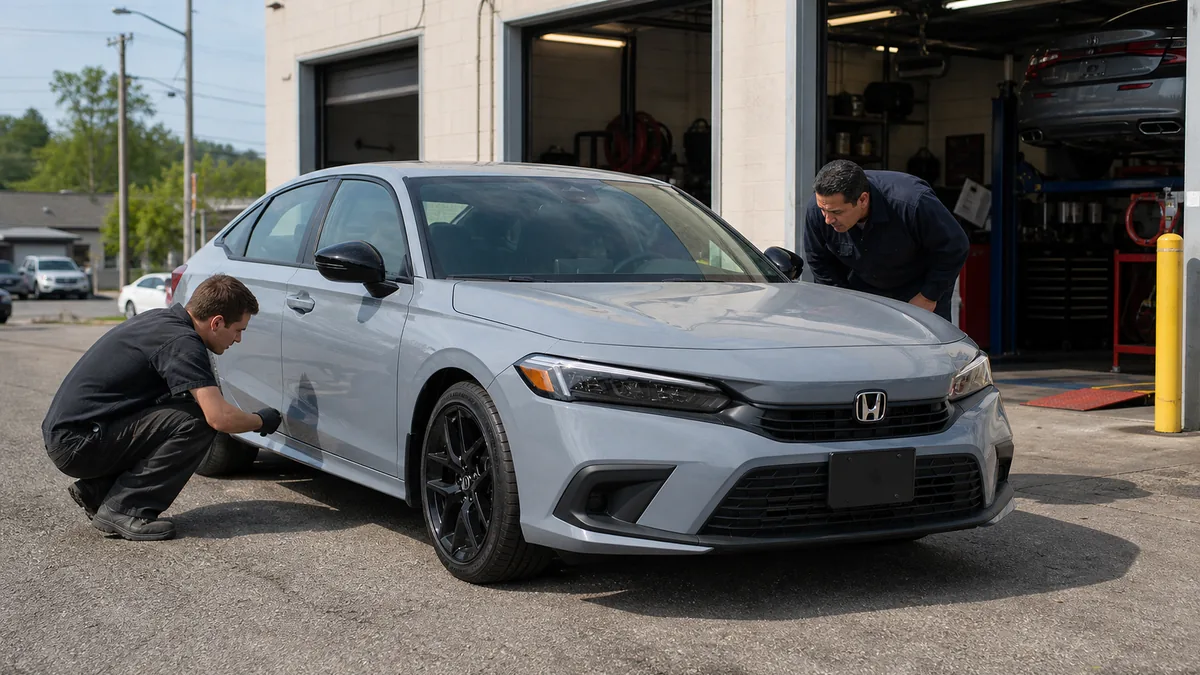
A cheap older Civic can also turn expensive fast if it needs suspension work, tires, and brakes in the first month.
The best Civic buy is the one that stays boring on paper, a clean title with stock parts, service history, and a trim that matches your use.
For budget shoppers, that boring math is the whole point. It is how the Civic protects the low running cost that made it attractive in the first place.
Shoppers chasing the rock-bottom payment sometimes cross-shop a cheaper Nissan Sentra, but its weaker resale can quietly erase the savings.
If you are still deciding whether to finance new or take on a used car, our lease or buy guide lines the monthly cost up against the long-term cost.
Civic versus Corolla and Camry, when to step up
Most Civic shoppers cross-shop two cars, so it helps to know when each one wins.
The Toyota Corolla is the closest rival, and it undercuts the Civic slightly on price while offering a standard hybrid across more of its range.
The Civic answers back with more rear-seat room and sharper steering, so it feels like the more grown-up small car to drive. Want the lowest price and a simple hybrid?
The Corolla is fair game. Want the car that stays fun on a back road?
The Civic holds its ground.
Pros
- Roomier and funner to drive than a Corolla
- Strong resale keeps long-term cost down
- Hybrid is quick and efficient in traffic
Cons
- Road noise is louder than a Camry or Accord
- No all-wheel drive at any trim
- Performance trims cost much more to insure
Step up to the Toyota Camry when you want a quieter highway ride and a wider rear seat for three adults.
Our Civic vs Camry comparison walks through where the extra size earns its money and where it does not.
The Honda Accord is the natural in-house step up if you like the Civic but keep running out of back-seat and trunk room.
It costs more, though it keeps the same easy-to-resell Honda math.
Here is the simple rule. Stay with the Civic when price, parking, and steering feel matter most.
Step up only when you genuinely need a wider rear seat, a quieter cabin, or more cargo than a compact trunk holds.
Which Civic should you buy
The Civic wins by balancing the things an owner notices every day.
It parks easily, uses little fuel, carries a usable trunk, and still feels awake from behind the wheel, even if it is not the biggest, quietest, or cheapest car in every matchup.
Start a new-car search with the Civic Hybrid. It adds power and fuel economy at the same time, the rare upgrade that improves the car in two directions at once.
Keep the gas LX or Sport on the table when the payment is the whole point.
A clean gas Civic can beat a flashy used Si for a buyer who just needs dependable transportation without a surprise insurance bill.
For a small family, bring the real gear to the test drive.
Fit the car seat, load the stroller, and check rear-seat access, because the Civic can handle more than its size suggests but it cannot cheat physics.
The final filter is easy. If you are explaining away noise, warning lights, modifications, or a payment that feels stretched, it is the wrong Civic.
If the car is stock, clean, cheap to insure, and matched to your commute, buy it with confidence.