Subaru
Subaru pairs standard all-wheel drive with outdoor capability. Browse our reviewed Subaru models.
Subaru sells one idea harder than any other carmaker: a car should be ready for bad weather the day you drive it home.
Almost the entire lineup ships with all-wheel drive as standard equipment, not a cost option, and the brand stakes its name on snow, safety, and the outdoors rather than luxury or straight-line speed.
Here is what the badge gets you, and where the one Subaru we have reviewed so far, the Outback, fits the picture.
All-wheel drive you do not pay extra for
Subaru is the only mainstream brand that makes all-wheel drive standard across nearly its whole range.
Where most rivals charge $1,500 to $2,000 to add it, a Subaru includes it on almost every model, the lone exception being its rear-drive sports car.
The company calls the system symmetrical all-wheel drive because the driveline is laid out evenly from left to right.
That balance helps the car put power down predictably on snow, gravel, and wet launches, without the driver thinking about it.
Our all-wheel drive hub shows how few carmakers make it standard the way Subaru does.
The honest catch is that AWD does nothing for braking or cornering on dry pavement, and it adds weight and a little fuel cost.
Standard all-wheel drive is real money well spent in snow country and close to wasted in a mild climate, so match the badge to your winters.
Boxer engines and why a Subaru sits low
Nearly every Subaru runs a boxer engine, a flat design where the pistons lie on their sides and punch outward instead of up and down.
That layout sits lower in the body than a normal upright engine, which drops the center of gravity and helps the car feel planted through corners and steady at highway speed.
The trade shows up at the fuel pump and in the noise.
Most Subarus pair the boxer with a CVT automatic, which keeps fuel use reasonable but holds the revs high under hard throttle, so the engine sounds busy when you push it.
That drone is normal Subaru behavior rather than a fault, and it is worth a hard test drive before you sign.
Power runs modest and useful rather than quick. In the Outback the base 2.
5L flat-four makes 182 hp for commuting and snow duty, while an optional 2. 4L turbo lifts that to 260 hp for towing and mountain passes at the cost of premium fuel.
The Outback shows what a Subaru is for
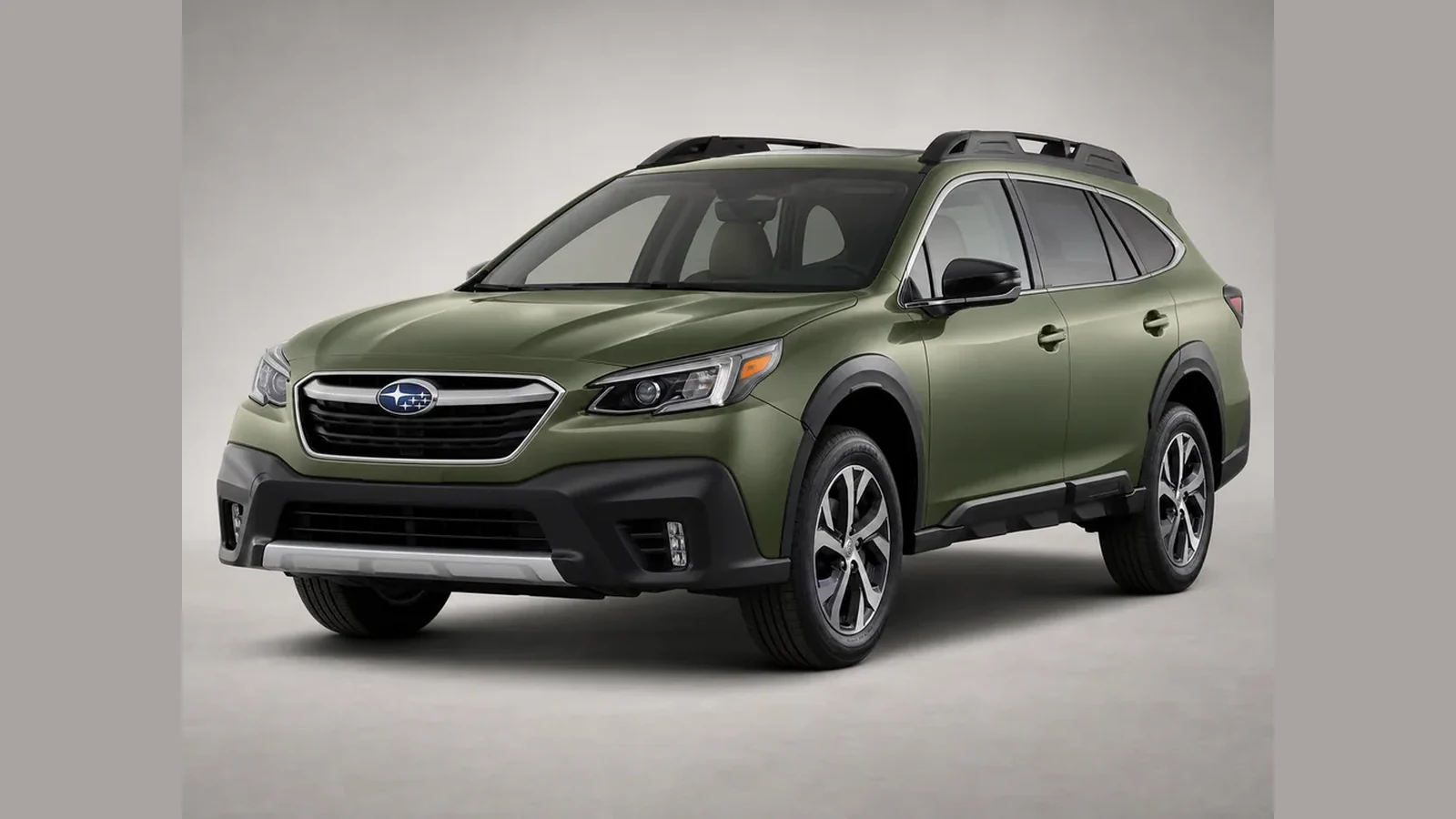
The Subaru Outback is the clearest picture of the brand's recipe: a wagon that loads low like a car but clears rough roads like a crossover.
It pairs standard AWD with 8.7 inches of ground clearance, 32.6 cubic feet of cargo behind the rear seat, and a 3,500-pound tow rating on the turbo.
Priced from about $30,000 to $43,000, the Outback is a 5-seater aimed squarely at the buyer who can name weather or gear as the reason to buy.
Snow, dogs, bikes, kayaks, ski trips, and long highway runs to the trailhead all point to it.
A shopper who only wants tall seating and city styling will find a traditional SUV easier to live with.
| Trait | What it means | Who it suits |
|---|---|---|
| Standard AWD | Grip on snow, gravel, and wet roads | Snow-state and rural drivers |
| Boxer engine | Low center of gravity, steady feel | Highway and back-road drivers |
| High clearance | Clears ruts, snowbanks, and trailheads | Camping and outdoor buyers |
| EyeSight safety | Driver aids standard, not optional | Families and commuters |
The rest of the lineup stretches the same idea into other shapes and sizes, from smaller crossovers to larger family haulers, all built on that AWD-and-boxer core.
The Outback is the worked example, but every Subaru is sold on the same promise of all-weather grip without truck size.
Safety is standard, not an upsell
Safety sits at the center of how Subaru engineers and markets its cars.
Most current models come with EyeSight, a camera-based bundle of driver aids that covers automatic emergency braking, lane-keeping assist, and adaptive cruise control, with no need to climb the trim ladder to get it.
That standard-safety approach mirrors the brand's whole pitch: capability you do not have to option in.
It also helps used values, because second-hand shoppers look for the same driver aids when they buy.
If a used Subaru wears EyeSight, confirm the camera areas are clean and the calibration history is clear, since those repairs raise claim costs.
What a Subaru costs to keep
Subaru ownership is friendly on resale and a little demanding on tires.
Values hold up strongest in cold states where AWD is in demand, which is good for your trade-in and a reason clean used examples can be priced high.
Tires are the first line of the budget. All-wheel drive wants four matched, quality tires, so a single damaged tire can force a matched replacement to keep the system happy.
Fuel cost is ordinary for the class, because Subaru leans on gas engines and AWD rather than the deep hybrid range some rivals sell, and most models sit in the gas column.
Reliability lands average to above average, with the current boxer engines and CVT proving dependable in daily use.
Older boxers earned a reputation for oil use and head-gasket worry, so on a used car check the oil level, service records, and matched tires rather than trusting the badge alone.
The cheapest Subaru to own is a fairly priced model with good tires and clean records, not a loaded one running uneven rubber.
Where another brand might fit better
Subaru is the all-weather default, not the answer to every brief. If you rarely see snow, a front-drive rival saves fuel with no real downside.
If low running cost tops your list, the Toyota RAV4 Hybrid does similar family duty and cuts the fuel bill, and Toyota offers a wider hybrid range overall.
Want a sharper, more engaging drive? Mazda steers with more polish.
Prefer a taller, more conventional crossover feel? The Honda CR-V shops more like a familiar SUV.
Choose Subaru when standard all-wheel drive and outdoor readiness matter more to you than hybrid economy, cabin polish, or the sportiest handling.
How we review Subarus
Every Subaru profile here is scored on the same measures as its rivals: real fuel economy, all-weather capability, reliability history, safety, and five-year cost to own.
We read EPA and NHTSA data alongside long-term reliability records, and a reviewing expert signs off on the buying advice before it goes live.
Start with the model that fits your week, then weigh it against the best family SUVs list, since that is where a Subaru most often competes.
Our guide to choosing an SUV helps you shop on features rather than the badge.
Frequently Asked Questions
Do all Subarus come with all-wheel drive?
What is a boxer engine and why does Subaru use it?
Is the Subaru Outback a wagon or an SUV?
Are Subarus reliable?
Should I buy a Subaru or a Toyota?
See how Subaru stacks up
Put these models against their rivals side by side, then read the full research-first review before you buy.
Compare cars